Select a pattern or symptom you've noticed:
Persistent Emotional State
Deep sadness, extreme highs, or emotional 'weather' that doesn't move for weeks.
Overactive Alarm System
Constant worry, panic spikes, or fear of judgment disproportionate to the actual danger.
Reality Disconnection
Hearing/seeing things others don't, or believing things that contradict shared reality.
Ingrained Life Patterns
Consistent instability in relationships or rigid ways of behaving since early adulthood.
Analysis
Select a card above to see the primary driver.
If you've ever felt like your emotions are steering the ship while you're just a passenger, or if you've noticed that your brain reacts to a stressful email like it's a life-threatening predator, you're experiencing the nuances of mental health. Understanding these categories helps move the conversation from 'What is wrong with me?' to 'How does my brain specifically function?'
Key Takeaways for Better Understanding
- Mental health challenges are usually grouped by their primary symptom (mood, thought process, or behavioral patterns).
- Many people experience "comorbidity," meaning they might deal with two or more types at once.
- Treatment isn't one-size-fits-all; what works for a mood disorder might not work for a personality disorder.
- Early recognition is the biggest factor in how quickly someone recovers and returns to their baseline.
The Emotional Rollercoaster: Mood Disorders
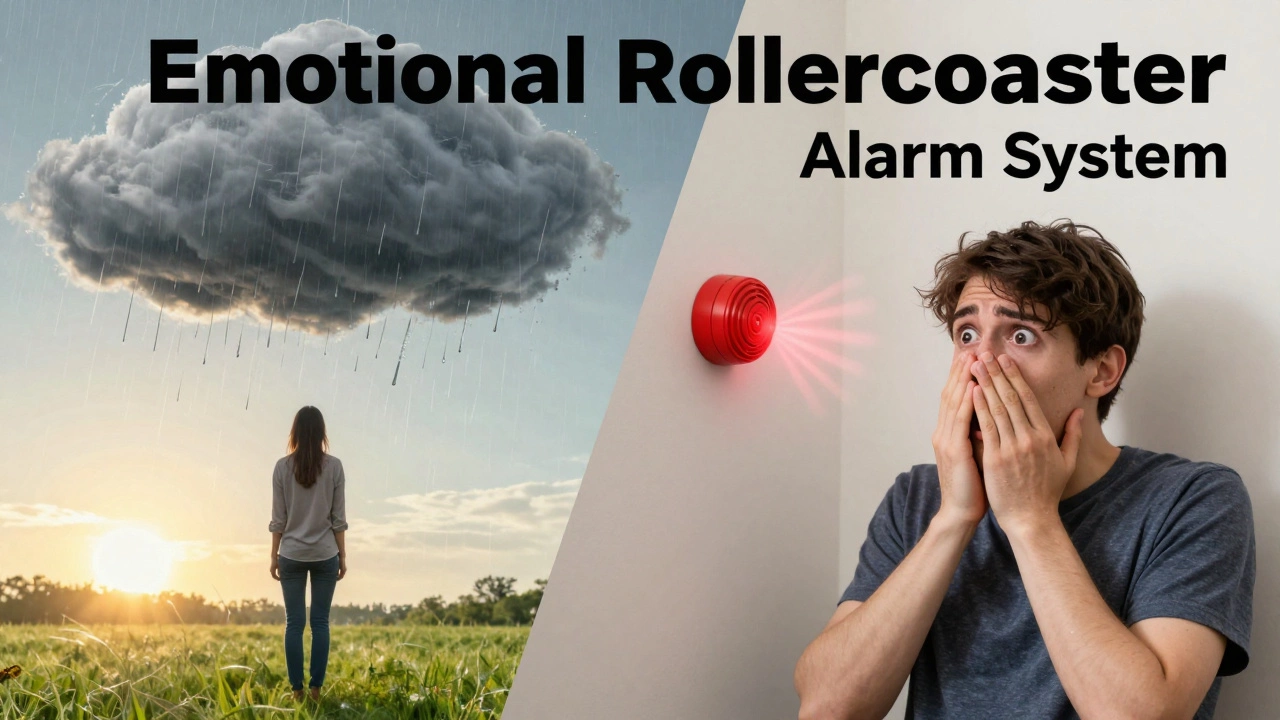
When we talk about mood disorders, we're focusing on the intensity and duration of a person's emotional state. Unlike a "bad day" where you feel sad because you failed a test, a mood disorder is an emotional state that persists regardless of your circumstances. It's like a weather system that refuses to move, trapping you in a specific climate for weeks or months.
Mood Disorders is a category of mental health conditions where a person's emotional state is distorted, causing significant distress or impairment in daily functioning. These aren't just mood swings; they are systemic shifts in how the brain regulates serotonin and dopamine.
The most common example is Major Depressive Disorder. It's not just feeling "blue." It's a physical heaviness that makes getting out of bed feel like climbing Everest. Then there's Bipolar Disorder, which is characterized by extreme shifts between manic highs-where you might spend all your savings on a "revolutionary" business idea in one weekend-and deep depressive lows.
Why does this happen? Often, it's a mix of genetics and chemistry. If your brain doesn't process neurotransmitters correctly, you can't simply "think positive" your way out of it, any more than a diabetic can "think" their blood sugar into a normal range. This is why medication paired with therapy is often the gold standard here.
The Alarm System Gone Wrong: Anxiety Disorders
Our brains have a built-in alarm system called the "fight or flight" response. It's great when you're avoiding a speeding car, but it's exhausting when it goes off because you have to make a phone call to a stranger. Anxiety Disorders are conditions characterized by excessive fear, worry, or dread that is disproportionate to the actual danger present.
Think of it as a smoke detector that's too sensitive. It goes off every time someone toasts bread, and eventually, you're living in a constant state of high alert. This manifests in different ways:
- Generalized Anxiety Disorder (GAD): A constant, humming worry about everything from the economy to whether the stove is off.
- Panic Disorder: Sudden, intense spikes of terror that can feel like a heart attack.
- Social Anxiety Disorder: An overwhelming fear of being judged or embarrassed in public.
The physical toll is real. Chronic anxiety keeps your cortisol levels high, which can lead to insomnia, digestive issues, and a weakened immune system. The goal of treating these is usually to "recalibrate" the alarm system through Cognitive Behavioral Therapy (CBT), which teaches the brain to distinguish between a real threat and a perceived one.
The Filter Break: Psychotic Disorders
Most of us have a shared reality. We agree that the sky is blue and that the chair we're sitting in is actually there. Psychotic disorders happen when that filter breaks. It's not "craziness" in the way movies portray it; it's a profound disconnection from the environment.
Psychotic Disorders are mental health conditions that affect the mind's ability to distinguish what is real from what is not. The most well-known is Schizophrenia. This often involves hallucinations (seeing or hearing things that aren't there) or delusions (believing things that aren't true, like thinking the TV is sending you secret coded messages).
These disorders often appear in late adolescence or early adulthood. They are heavily linked to brain structure and chemistry, particularly how dopamine is managed in the prefrontal cortex. Because the person's reality is different from ours, the primary challenge is often getting them to accept treatment. However, with antipsychotic medications and social support, many people lead stable, fulfilling lives.
The Pattern Problem: Personality Disorders
While the first three types are often about "episodes" (a depressive episode, a panic attack), personality disorders are about "patterns." They are deeply ingrained ways of thinking and behaving that make it very hard to maintain healthy relationships or function in a workplace.
Personality Disorders are rigid and unhealthy patterns of thinking, functioning, and behaving that deviate from cultural expectations. These usually develop by the time a person reaches adulthood and are often rooted in childhood trauma or unstable early environments.
You might have heard of Borderline Personality Disorder (BPD), which involves extreme instability in moods, self-image, and relationships. There is also Antisocial Personality Disorder, where a person lacks empathy and disregards social norms. Unlike a mood disorder, which might lift with a pill, personality disorders usually require long-term, intensive therapy-like Dialectical Behavior Therapy (DBT)-to learn new ways of interacting with the world.
| Type | Primary Driver | Typical Symptom | Common Treatment |
|---|---|---|---|
| Mood Disorders | Emotional Dysregulation | Persistent sadness or mania | Antidepressants / Therapy |
| Anxiety Disorders | Hyper-active Fear Response | Constant worry / Panic attacks | CBT / Beta-blockers |
| Psychotic Disorders | Loss of Reality Contact | Hallucinations / Delusions | Antipsychotics / Support |
| Personality Disorders | Maladaptive Behavioral Patterns | Relationship instability | Long-term Psychotherapy |
How to Spot the Difference
It's easy to confuse these. For example, someone with a personality disorder might experience a depressive episode, and someone with schizophrenia might feel extreme anxiety. The key is looking at the primary driver. If the depression is the core problem and the anxiety is just a result of being depressed, it's a mood disorder. If the personality traits (like a need for control) cause the depression, it's likely a personality disorder.
One concrete way to tell is the "baseline." In anxiety and mood disorders, there are often periods where the person feels completely "normal." In personality disorders, the maladaptive patterns are usually present across all areas of life, regardless of the mood of the day. Psychotic disorders are unique because they introduce elements that do not exist in the physical world, creating a clear break from the shared experience of others.

Navigating the Path to Recovery
Getting a diagnosis isn't about putting yourself in a box; it's about finding the right key for the lock. If you treat a personality disorder with only medication, you're treating the symptoms but not the root cause. If you treat a psychotic disorder with only "positive thinking," you're ignoring a chemical imbalance that requires medical intervention.
The first step is always a professional evaluation. A licensed psychiatrist or psychologist uses a combination of clinical interviews and standardized tools (like the DSM-5) to figure out where a person fits. From there, the approach is usually a "biopsychosocial" model: addressing the biology (meds), the psychology (therapy), and the social (family support and lifestyle changes).
Can I have more than one type of mental health disorder?
Yes, this is called comorbidity. It is actually very common. For example, someone might have both a mood disorder (like depression) and an anxiety disorder. Often, one triggers the other-chronic anxiety can wear a person down until they fall into a deep depression.
Are these conditions permanent?
Not necessarily. While some (like schizophrenia or certain personality disorders) are managed lifelong, many others are episodic. People can go into full remission from depression or anxiety with the right combination of therapy and lifestyle changes.
What is the difference between a mood swing and a mood disorder?
A mood swing is a short-term change in emotion usually triggered by an event. A mood disorder is a sustained state that doesn't always have an external trigger and interferes with your ability to work, eat, sleep, or maintain relationships for extended periods.
Can lifestyle changes cure these disorders?
Lifestyle changes-like exercise, better sleep, and mindfulness-are powerful tools that support recovery. However, for moderate to severe disorders, they are usually complementary to professional therapy and medication, not a replacement for them.
How do I know if I should see a psychologist or a psychiatrist?
Psychiatrists are medical doctors who can prescribe medication and focus more on the biological side of mental health. Psychologists focus on behavioral and emotional therapy through "talk therapy." Many people see both, or a therapist who coordinates with a doctor.
Next Steps and Troubleshooting
If you suspect you or a loved one fits into one of these categories, avoid the urge to self-diagnose using internet checklists. The overlap between these disorders is too high for a layman to distinguish accurately. Start by tracking symptoms in a journal: when do they happen, how long do they last, and what triggers them?
For those in a crisis, the first step isn't long-term therapy-it's stabilization. This might mean a short-term medication adjustment or a crisis center. Once the "fire" is out, you can begin the slower work of understanding which category of mental health you're dealing with and building a long-term management plan.
 How Do IVF Babies Look? Real Facts vs. Myths
 What Herbs Increase Blood Pressure? Top 7 Herbs to Avoid if You Have Hypertension
 What is the Most Treatable Mental Illness?
 How to Drop 20 Pounds Fast: Proven Weight Loss Tactics That Work
 Can Christians Take Herbs? A Practical Guide to Herbal Supplements and Faith