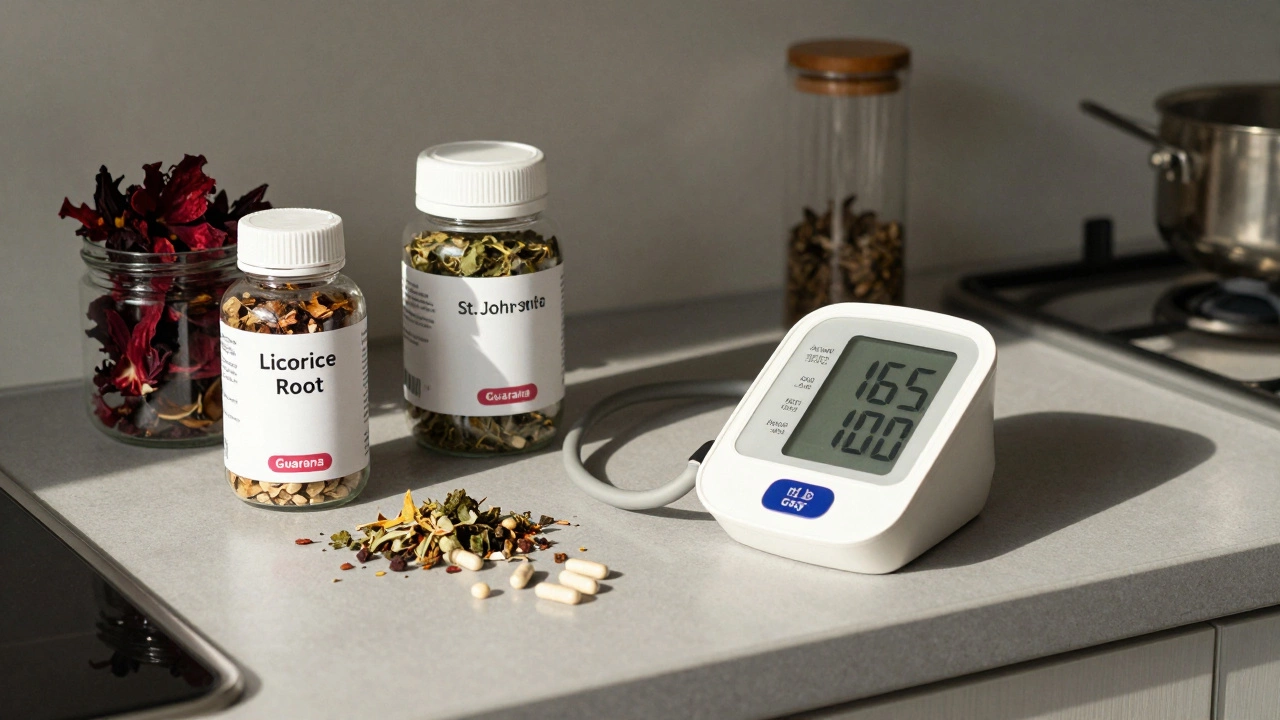
Herb Safety Checker for Hypertension
Enter a herb name to check its safety for hypertension patients.
If you’re managing high blood pressure, you might be careful about salt, caffeine, or processed foods-but what about the herbs in your tea, supplements, or kitchen cabinet? Many people assume natural equals safe, but some herbs can push your blood pressure up, sometimes dangerously so. This isn’t about scare tactics. It’s about knowing what’s actually in your body when you reach for that bottle labeled ‘natural remedy’.
Why Some Herbs Raise Blood Pressure
Your blood pressure isn’t just a number on a machine. It’s the force your heart uses to push blood through your arteries. When certain herbs interact with your nervous system, hormones, or blood vessels, they can cause that force to spike. These aren’t rare side effects-they’re well-documented in clinical studies and case reports from hospitals across India and the U.S.
Some herbs work like stimulants. Others block natural blood pressure-lowering chemicals in your body. A few even interfere with prescription medications, making them less effective or causing dangerous spikes. If you’re on blood pressure meds like lisinopril, amlodipine, or hydrochlorothiazide, mixing them with certain herbs can be risky.
Herbs That Can Raise Blood Pressure
Here are seven herbs with strong evidence linking them to increased blood pressure. Avoid them if you have hypertension-or talk to a doctor before using them.
- Ephedra (Ma Huang): This herb contains ephedrine, a powerful stimulant once used in weight-loss pills and energy boosters. It’s banned in the U.S. and India for safety reasons, but you might still find it in unregulated supplements. Ephedra can raise systolic blood pressure by 10-20 mmHg within hours. Even small doses can trigger heart palpitations or stroke in vulnerable people.
- Licorice Root: Common in Ayurvedic tonics and herbal teas, licorice contains glycyrrhizin. This compound tricks your body into holding onto sodium and losing potassium-exactly what happens in some forms of high blood pressure. One study in the Journal of Human Hypertension found that people who took 100 mg of licorice daily for two weeks saw their systolic pressure rise by an average of 14 mmHg. Stop taking it, and pressure drops back down.
- St. John’s Wort: Often used for mild depression, this herb interferes with how your body breaks down blood pressure medications. It can make drugs like amlodipine or beta-blockers less effective. In one case reported in The Lancet, a patient’s blood pressure jumped from 120/80 to 165/100 after starting St. John’s Wort while on a calcium channel blocker.
- Yohimbe: Extracted from the bark of an African tree, yohimbe is sold as a sexual enhancer and weight-loss aid. Its active ingredient, yohimbine, stimulates the nervous system and causes blood vessels to constrict. Blood pressure spikes are common, especially when combined with caffeine. In Bangalore clinics, emergency visits for yohimbe-related hypertension have doubled since 2022.
- Black Cohosh: Popular for menopause symptoms, black cohosh has been linked to elevated blood pressure in multiple case studies. While not everyone reacts, the risk is real enough that the European Medicines Agency warns against its use in people with hypertension. The exact mechanism isn’t fully known, but it likely affects estrogen pathways that influence vascular tone.
- Guarana: You’ll find guarana in energy drinks, weight-loss pills, and even some herbal teas. It’s a natural source of caffeine-sometimes more concentrated than coffee. One gram of guarana can contain up to 40 mg of caffeine. For someone sensitive to caffeine or already on BP meds, this can mean a sudden, dangerous rise in pressure.
- Arnica: Often used topically for bruises, arnica can be dangerous if taken orally. Some traditional remedies include arnica tea or tinctures. Oral use has been linked to increased heart rate and elevated blood pressure. The German Commission E has flagged arnica as potentially toxic when ingested.
What About Herbs That Lower Blood Pressure?
It’s easy to get confused. You’ve probably heard garlic, hibiscus, or celery seed helps lower blood pressure. That’s true-but the opposite is also true. Just because a herb is natural doesn’t mean it’s neutral. Some herbs are like switches: they either turn your blood pressure up or down, depending on your body and what else you’re taking.
If you’re trying to lower your BP, focus on proven, safe options like hibiscus tea (three cups a day can reduce systolic pressure by 7-13 mmHg) or garlic supplements (studies show 600-1,200 mg daily helps). But don’t assume mixing herbs is safe. Combining multiple blood pressure-lowering herbs with medication can drop your pressure too low, causing dizziness or fainting.
Who Should Be Extra Careful?
Some people are more at risk:
- Those over 60-blood vessels become less flexible, and the body processes herbs slower
- People with kidney disease-many herbs are cleared by the kidneys; if they’re damaged, herbs build up in the blood
- Anyone on more than one blood pressure medication-the risk of interaction grows with each drug
- Those using herbal supplements from unregulated sources-labels often lie, and contamination is common
In Bangalore, a 2024 study from Manipal Hospital found that 37% of patients with uncontrolled hypertension were taking herbal supplements without telling their doctors. Most didn’t think it mattered. But when they stopped, their BP dropped by an average of 18 mmHg in four weeks.
How to Stay Safe
Here’s what to do:
- Always tell your doctor what herbs, teas, or supplements you take-even if you think they’re harmless.
- Check labels. Look for ingredients like ephedra, licorice root, yohimbe, or guarana. If you don’t recognize them, Google them before taking.
- Don’t trust ‘all-natural’ claims. Just because something comes from a plant doesn’t mean it’s safe. Poison ivy is natural too.
- Start low, go slow. If you’re trying a new herb, take a small dose for a few days and monitor your blood pressure at home.
- Use regulated brands. In India, look for products with AYUSH certification. Avoid imported supplements from Amazon, eBay, or social media sellers.

What to Do If Your BP Spikes After Taking an Herb
If your blood pressure suddenly rises above 160/100 after taking a new herb:
- Stop taking it immediately
- Drink water and rest
- Check your pressure again in 30 minutes
- If it’s still high or you feel dizzy, chest pain, or shortness of breath, go to the nearest emergency room
Don’t wait. A sudden spike can lead to stroke, heart attack, or kidney damage-even in young, otherwise healthy people.
Bottom Line
Herbs aren’t all safe just because they’re natural. Some can be just as powerful-and dangerous-as prescription drugs. If you have high blood pressure, avoid ephedra, licorice root, St. John’s Wort, yohimbe, black cohosh, guarana, and arnica. Stick to herbs with proven safety records, and always talk to your doctor before adding anything new to your routine. Your heart will thank you.
 IVF Cost per Cycle: How Much Does One Round Really Cost?
 The 30/30/30 Method: A Fresh Approach to Fat Loss
 How Long Is the Average Stay in Rehab After Knee Replacement?
 Is Medical Tourism Safe in Mexico? What You Need to Know Before You Go
 Has Anyone Been Saved from Stage 4 Cancer? Real Stories, Science, and Hope