Knee Surgery Recovery Estimator
This calculator estimates your recovery timeline after knee surgery based on key factors from the article. While everyone's recovery is unique, understanding these factors helps you set realistic expectations.
When you're 70 and your knee has been hurting for years, the idea of surgery feels like a last resort-and a big one. You’ve heard stories about people bouncing back in weeks, but you’re not 40 anymore. You’re wondering: how long does it take a 70-year-old to recover from knee surgery? The truth isn’t a single number. It’s a mix of your health, your effort, and how well your body heals.
What recovery really looks like at 70
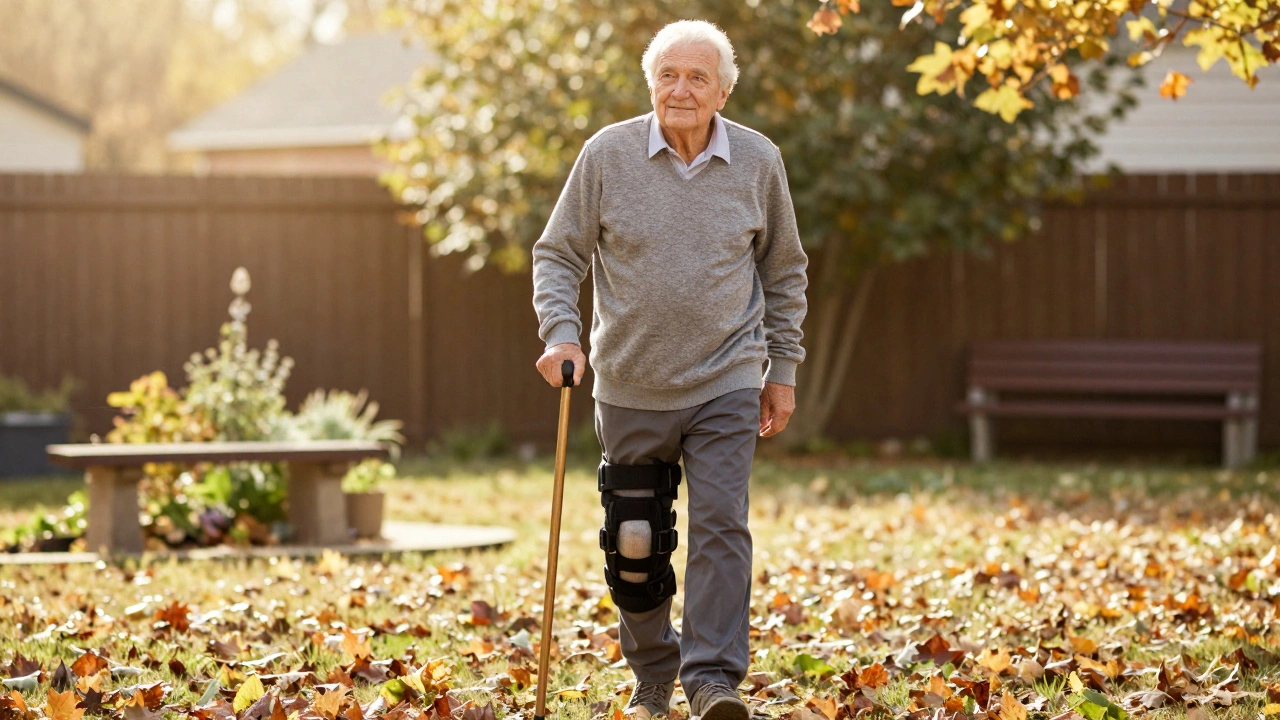
Most 70-year-olds who get a total knee replacement leave the hospital in 1 to 3 days. That’s standard. But going home doesn’t mean you’re done healing. The first 6 weeks are about getting back to basics: walking without a cane, climbing a few stairs, and dressing yourself. Many people need help at home during this time-whether from family, a home nurse, or a physical therapist.
By week 6, most patients can walk a quarter mile without pain. That’s a big win. But full recovery? That’s a 3-to-6-month journey. Unlike younger patients who might jog again by 3 months, most 70-year-olds focus on comfort, not speed. You’re not trying to run a marathon. You’re trying to walk to the grocery store without stopping.
Why recovery takes longer after 70
It’s not just age. It’s what comes with it. Many people over 70 have other health issues-diabetes, heart disease, or arthritis in other joints. These slow healing. Muscle mass naturally declines with age. At 70, you might have lost 20-30% of your muscle strength compared to when you were 40. That means your leg muscles aren’t as strong to support the new knee.
Also, your body’s ability to repair tissue slows down. Blood flow to the knee drops. Inflammation takes longer to calm. And if you’ve been inactive for years because of pain, your body has forgotten how to move well. Recovery isn’t just about fixing the knee-it’s retraining your whole body.
Studies from the Journal of Bone and Joint Surgery show that patients over 70 take 2.3 times longer to reach the same mobility levels as those under 60. That doesn’t mean it’s impossible. It just means you need to plan for it.
What speeds up recovery
Recovery isn’t just about waiting. It’s about doing the right things at the right time.
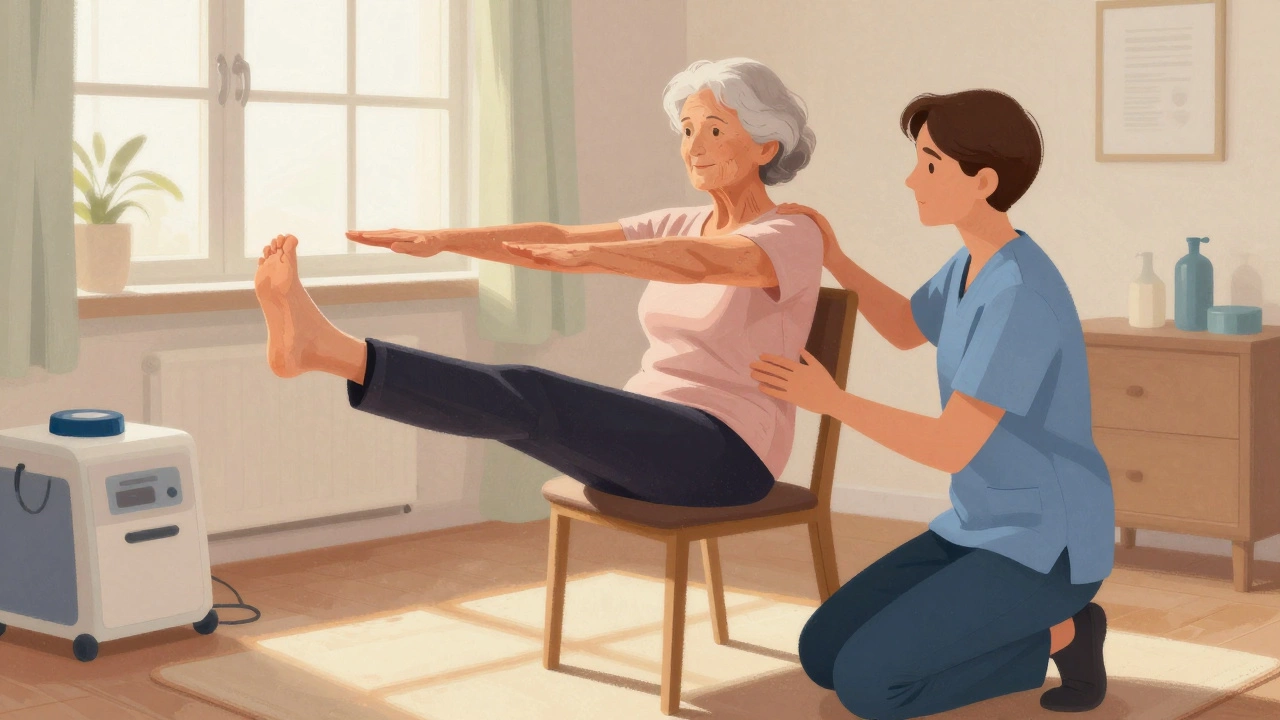
- Start moving the same day. Physical therapy begins in the hospital. You’ll sit up, swing your leg, and take a few steps with help. This isn’t optional-it prevents blood clots and keeps your muscles awake.
- Walk every day. By day 3, aim for 10 minutes. By week 2, 30 minutes. Use a walker or cane if needed. Walking builds strength faster than any machine.
- Do your exercises. Your therapist will give you 5-7 simple moves: straight leg raises, heel slides, ankle pumps. Do them 3 times a day. Skip them, and you’ll regret it.
- Manage your weight. Every extra pound puts 3-4 pounds of pressure on your knee. Losing even 5-10 pounds before surgery cuts recovery time and reduces pain.
- Stop smoking. Smoking cuts oxygen to healing tissues. If you smoke, quitting even 4 weeks before surgery improves outcomes by 40%.
People who follow these steps recover 30-50% faster than those who don’t. It’s not magic. It’s biology.
What slows recovery down
Some habits make recovery harder-sometimes in ways you don’t expect.
- Staying too still. Fear of pain leads to inactivity. But sitting all day causes stiffness, swelling, and muscle loss. Movement is medicine.
- Skipping pain meds when needed. Pain control isn’t about being tough. If you’re in pain, you can’t do your exercises. Take your meds as prescribed. Untreated pain delays progress.
- Not sleeping well. Poor sleep raises inflammation. It also makes you feel more pain. Try to sleep 7-8 hours. Use pillows under your leg to reduce swelling.
- Trying to do too much too soon. Climbing 3 flights of stairs on day 10? That’s a recipe for swelling and setbacks. Pushing too hard can cause falls or damage the new joint.
- Ignoring mental health. Depression after surgery is common in seniors. Feeling down makes you less likely to move, eat well, or take meds. Talk to someone. A counselor, a friend, a support group-it helps.
When you’ll feel like yourself again
By 3 months, most 70-year-olds can walk without a cane, drive a car, and do light housework. You’ll still have some stiffness in the morning, but the constant pain is gone. You’ll sleep better. You’ll go out more.
At 6 months, you’ll notice real changes. Climbing stairs feels easier. Standing for 20 minutes doesn’t tire you out. You might even walk to the park or sit through a movie without needing a break.
By 12 months, the knee feels like part of you. The swelling is gone. The scar is soft. You’ve rebuilt your strength. Most people say they wish they’d done it sooner.
But here’s the catch: not everyone gets there. About 1 in 5 seniors over 70 don’t fully regain their mobility. Often, it’s because they didn’t commit to rehab. Or they had complications like infection or blood clots. That’s why preparation matters-before and after surgery.
What to expect in the first year
Recovery isn’t linear. Some days you’ll feel great. Others, your knee will ache after rain or a long walk. That’s normal. It doesn’t mean something’s wrong.
Here’s a rough timeline:
- Week 1-2: Pain control, swelling management, walking with aid.
- Week 3-6: Walking without a cane, climbing stairs, starting light exercises.
- Month 2-3: Returning to light activities-gardening, short walks, shopping.
- Month 4-6: Increased endurance, less stiffness, better balance.
- Month 7-12: Full function. No pain at rest. Confidence to move without fear.
Some people reach milestones faster. Others take longer. That’s okay. Your pace is yours.
When to call your doctor
Most recovery is smooth. But watch for these red flags:
- Fever over 101°F (38.3°C)
- Redness, warmth, or pus around the incision
- Sudden swelling in the calf or thigh
- Sharp, stabbing pain that doesn’t go away with rest or meds
- Inability to move your foot or toes
These could mean infection, blood clots, or nerve damage. Don’t wait. Call your surgeon right away.
Real stories from real people
Mrs. Rao, 72, from Chennai, had her knee replaced in October 2025. She was afraid she’d never walk without pain again. She did her exercises every day, even when she didn’t feel like it. By 4 months, she was walking 2 miles in the morning. Now she dances with her grandchildren.
Mr. Patel, 74, skipped physical therapy because he thought he’d be fine on his own. Six months later, he still couldn’t bend his knee past 90 degrees. He needed a second surgery to fix stiffness.
One isn’t luck. The other is a warning.
Final thoughts
Recovery from knee surgery at 70 isn’t about getting back to who you were. It’s about becoming who you can be now. You won’t run a 5K. But you might walk to the temple without help. You might sit on the floor to play with your grandchild. You might finally sleep through the night.
The surgery fixes the knee. But your effort fixes your life. It takes time. It takes work. But for most 70-year-olds, it’s worth every step.
Can a 70-year-old have a successful knee replacement?
Yes, absolutely. Over 80% of patients over 70 report significant pain relief and improved mobility after knee replacement. Success isn’t about age-it’s about overall health, commitment to rehab, and having realistic expectations. Many seniors live more actively after surgery than they did before.
Is knee replacement safe for someone with heart disease?
It can be. Surgeons assess heart health before surgery. If you’re stable-no recent heart attack, controlled blood pressure, and no severe arrhythmias-you’re likely a candidate. Many hospitals now use minimally invasive techniques that reduce stress on the heart. Your cardiologist and orthopedic team will work together to make it safe.
How long do knee replacements last in seniors?
Modern knee implants last 15-20 years in most patients. For someone 70 at the time of surgery, the implant will likely last the rest of their life. Even if it wears out later, revision surgery is possible. Most seniors don’t need a second replacement.
Do I need to go to a rehab center after surgery?
Not always. Many seniors recover well at home with daily physical therapy visits. But if you live alone, have no support, or have other health issues like dementia or severe weakness, a short-term rehab center (1-3 weeks) can help you build strength safely before going home.
What’s the risk of complications at 70?
The overall complication rate is around 5-8%. The most common are blood clots, infection, and stiffness. These are higher than in younger patients but still low overall. Your doctor will give you blood thinners, antibiotics, and a rehab plan to reduce these risks. Staying active and following instructions cuts your risk significantly.
Will I be able to kneel after surgery?
Some people can, some can’t. Kneeling isn’t required for daily life, so most surgeons don’t push it. If you want to kneel for prayer or gardening, ask your surgeon before the operation. Some implants allow it, others don’t. Even if you can kneel, it might feel uncomfortable at first. Use a cushion.
How soon can I travel after knee surgery?
Short trips by car are usually fine after 2-3 weeks, as long as you can move your leg and take breaks to stretch. Flying is safe after 6 weeks, but you’ll need to walk the aisle every hour to prevent blood clots. Always check with your surgeon before long-distance travel.
Recovery after knee surgery at 70 isn’t a race. It’s a quiet, daily act of courage. One step. One stretch. One good night’s sleep. That’s how you get back your life-not in months, but in moments.
 Top 5 Cancer Treatments Explained: Latest Advances and What to Expect
 What’s Taking Over from Metformin in Diabetes Care?
 What Is the Toughest Mental Illness to Treat?
 Stage 4 Cancer Life Expectancy: Understanding Prognosis and Options
 Top Diabetes Medication: Why Metformin Leads the Pack