
Cancer Detection Timing Calculator
How Early Detection Affects Survival
Learn how much earlier detection can improve your chances. Based on medical studies showing survival rates drop significantly as cancer progresses.
Enter your information above to see how early detection impacts survival chances.
Some people live for years with cancer and never know it. Not because they’re lucky, but because cancer doesn’t always scream. It can creep in quietly, growing slowly while the body keeps functioning like nothing’s wrong. By the time symptoms show up, the cancer may have spread. This isn’t rare. It happens more often than most people realize.
How cancer hides in plain sight
Cancer doesn’t always cause pain, weight loss, or fatigue right away. Many types-like pancreatic, ovarian, liver, and early-stage lung cancer-don’t trigger obvious signs until they’re advanced. A tumor in the pancreas can press on nerves or block bile ducts, but it might not hurt until it’s large enough to damage nearby organs. Ovarian cancer can cause bloating or indigestion, which people blame on stress or diet. Lung cancer might just feel like a persistent cough, something you’d chalk up to allergies or smoking.
Studies show that about 20% of cancer cases in the U.S. are diagnosed only after the disease has already spread to other parts of the body. In some cases, cancer is found accidentally-during a scan for something else, like a kidney stone or a back injury. A 68-year-old man in Ohio had a CT scan for back pain and found out he had stage IV colon cancer. He’d had no symptoms. No weight loss. No blood in stool. Just a quiet tumor growing for five years.
Why some cancers stay silent for so long
Not all cancers behave the same. Some grow fast and cause trouble early. Others move slowly, like a ticking clock with no alarm. The slower the growth, the longer it can go unnoticed. Slow-growing cancers include certain types of prostate cancer, thyroid cancer, and low-grade lymphomas. These can sit for years without causing damage. In fact, some prostate cancers are so slow that doctors recommend active surveillance instead of immediate treatment.
But silence doesn’t mean safety. Even slow-growing cancers can eventually turn aggressive. A small tumor in the liver might stay harmless for three years, then suddenly start spreading. By then, surgery may no longer be an option. The body doesn’t warn you. There’s no pain signal. No fever. No red flag.
Who’s most at risk for silent cancer?
Age is the biggest factor. Over 70% of all cancer diagnoses happen in people over 55. The older you get, the more DNA errors build up in your cells. These errors can turn normal cells into cancerous ones without triggering symptoms right away.
Genetics also play a role. People with inherited mutations-like BRCA1 or BRCA2-have a higher chance of developing cancers that don’t show early signs. Lynch syndrome increases risk for colon and endometrial cancers that can grow unnoticed for years.
And then there’s lifestyle. Smoking, heavy alcohol use, obesity, and chronic inflammation from conditions like hepatitis or Crohn’s disease all raise cancer risk. But even healthy people aren’t immune. A 45-year-old woman who exercises daily and eats organic food can still develop ovarian cancer without symptoms. There’s no guaranteed shield.
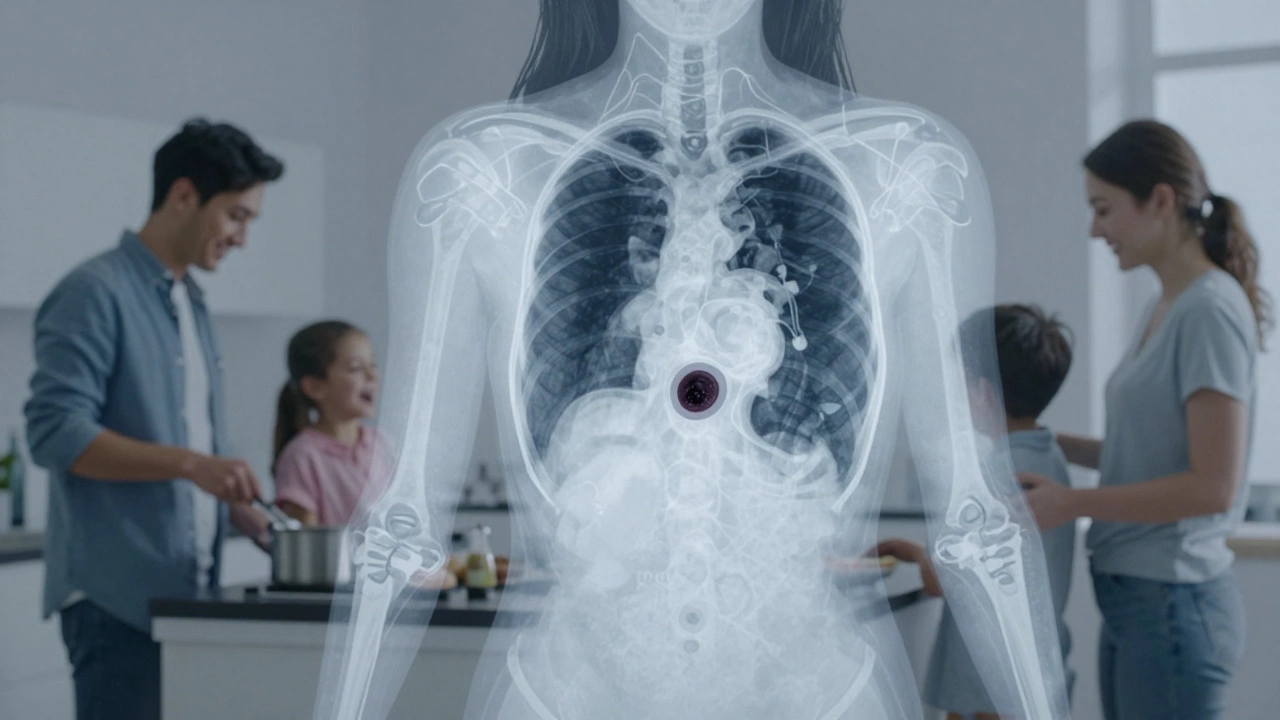
How long can you live without knowing?
There’s no single answer. It depends on the type of cancer, where it is, how fast it grows, and your overall health.
For some, it’s months. For others, it’s decades.
One study tracked 1,200 people with undiagnosed prostate cancer. About 30% lived more than 15 years without treatment. Many died of other causes, not cancer. Another study found that 1 in 5 people with early-stage lung cancer showed no symptoms until the cancer was already stage III or IV. Their survival time after diagnosis ranged from 6 months to 3 years, depending on treatment.
But here’s the catch: survival after diagnosis is not the same as survival without knowing. The longer cancer goes undetected, the harder it is to treat. Early-stage breast cancer has a 99% five-year survival rate. Stage IV? That drops to 29%. The difference isn’t just treatment-it’s time.
What you can do to catch it early
You can’t prevent all cancers. But you can catch more of them before they become dangerous.
- Screening saves lives. Mammograms for breast cancer, colonoscopies for colorectal cancer, Pap tests for cervical cancer, and low-dose CT scans for high-risk smokers can find cancer before symptoms appear.
- Know your family history. If close relatives had cancer before age 50, talk to your doctor. Genetic testing might be an option.
- Don’t ignore small changes. A mole that changes shape, unexplained bruising, persistent bloating, or a cough that won’t go away-even if it’s mild-deserve a checkup.
- Get regular checkups. Annual physicals don’t catch everything, but they can spot warning signs like abnormal blood work or swollen lymph nodes.
Many people avoid screenings because they’re afraid. But the fear of finding cancer is often worse than the reality. Early detection means less invasive treatment. Fewer side effects. Higher survival rates.
What happens when cancer is found too late?
When cancer spreads, treatment shifts from curing to controlling. Surgery may no longer be possible. Chemotherapy and radiation become about slowing growth, not removing it. Quality of life drops. Pain increases. Survival time shortens.
For example, pancreatic cancer is often called a silent killer because 80% of cases are diagnosed after spreading. The average survival time after diagnosis is just 6 to 11 months. That’s not because it’s untreatable-it’s because it was found too late.
But even late-stage cancer isn’t always a death sentence. Some people live years with metastatic cancer, managing it like a chronic illness. Advances in targeted therapies and immunotherapy have changed the game. A 55-year-old woman with stage IV melanoma, once considered terminal, lived for eight years on a combination of drugs that stopped her cancer from spreading.
It’s not about fear. It’s about awareness.
Living with cancer without knowing isn’t a miracle. It’s a risk. And the longer you wait, the more that risk grows. You don’t need to live in fear of every ache or bump. But you do need to be smart about your health.
Screening isn’t optional for people over 50. It’s essential. And even if you’re younger, if you have a family history or risk factors, don’t wait for symptoms. They might never come-or they might come too late.
Cancer doesn’t always announce itself. But your body still gives clues-if you know what to look for. And sometimes, the best way to survive cancer is to catch it before it has a chance to speak.
Can you have cancer for years without knowing?
Yes. Many cancers, especially slow-growing ones like prostate, thyroid, or early-stage ovarian cancer, can develop for years without causing noticeable symptoms. Some people are diagnosed only after the cancer has spread, often during tests for unrelated issues.
What are the most common silent cancers?
The most common silent cancers include pancreatic, ovarian, liver, kidney, and early-stage lung cancer. These often don’t cause pain or obvious symptoms until they’ve grown large or spread to other organs. Prostate and thyroid cancers can also remain undetected for years because they grow slowly.
How do you know if you have cancer if you feel fine?
Feeling fine doesn’t mean you’re cancer-free. Regular screenings are the only reliable way to detect cancer early. Mammograms, colonoscopies, Pap smears, and low-dose CT scans for smokers can find cancer before symptoms appear. Blood tests and physical exams can also spot warning signs like abnormal cell counts or lumps.
Is it possible to live a normal life with undiagnosed cancer?
Yes, for some people. Especially with slow-growing cancers, individuals can live for years with no impact on daily life. They work, exercise, travel, and raise families-unaware of the tumor inside. But this doesn’t mean it’s safe. The cancer could suddenly become aggressive, making treatment harder and less effective.
What’s the longest someone has lived with undiagnosed cancer?
There are documented cases of people living 20+ years with slow-growing cancers like low-grade prostate or thyroid cancer without knowing. In rare cases, cancer was only discovered after death during an autopsy. But these are exceptions. Most cancers, even slow ones, eventually progress. Early detection remains the best chance for long-term survival.
 Can You Avoid Knee Replacement if You Are Bone-on-Bone?
 How Do IVF Babies Look? Real Facts vs. Myths
 What Is the Most Effective Weight Loss Treatment?
 Understanding the Various Types of Heart Surgery Procedures in 2025
 Pitta Person Traits: What Sets Them Apart in Ayurveda