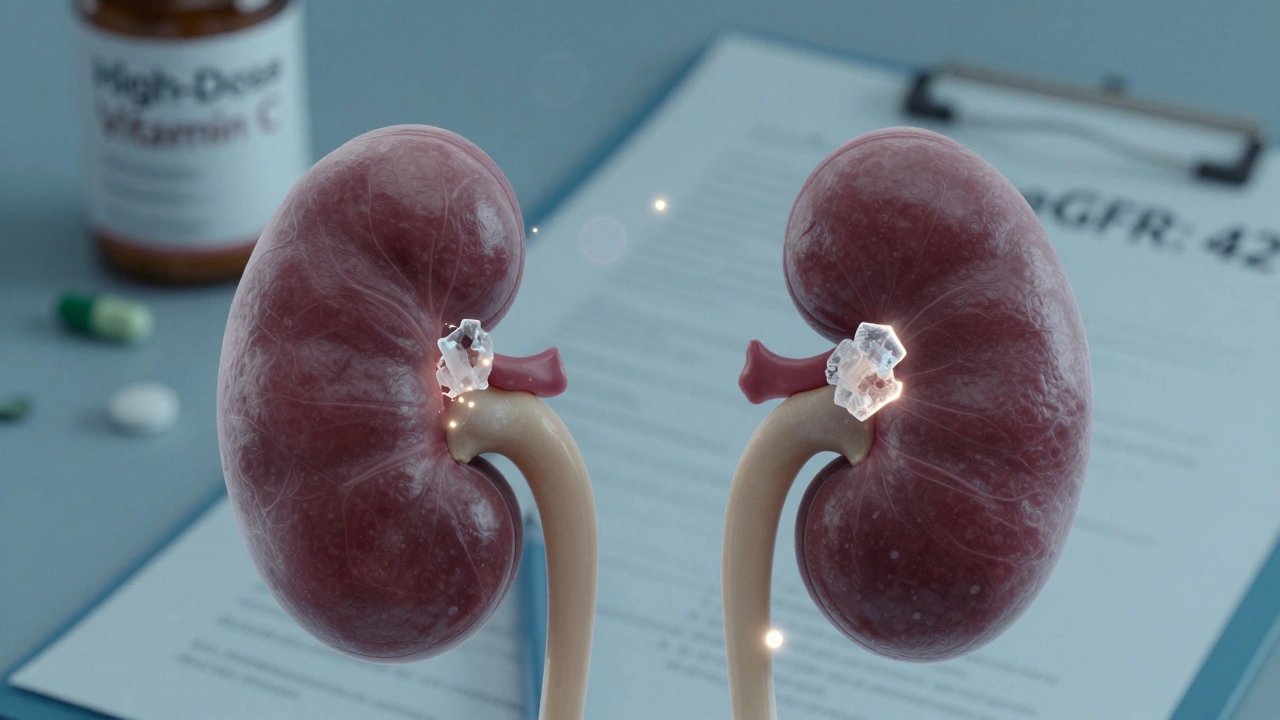
When you're taking vitamins or herbal supplements, you might assume they're harmless because they're "natural." But the truth is, some of them can put serious stress on your kidneys - especially if you already have kidney issues, are on dialysis, or are older. Your kidneys filter everything you take in. They don't just remove waste; they also clear out excess nutrients, herbs, and chemicals. Some supplements overload this system, leading to damage you won’t feel until it’s too late.
Which vitamins and herbs are hardest on the kidneys?
Not all supplements are equal. Some are safe for most people. Others? They’re like pouring salt into a clogged drain. Here are the top offenders backed by clinical reports and nephrology guidelines.
- Vitamin C in high doses - Over 2,000 mg per day can lead to oxalate buildup. Oxalate crystals form in the kidneys and can cause blockages or kidney stones. A 2021 study in the Journal of the American Society of Nephrology found that chronic high-dose vitamin C users had a 40% higher risk of kidney stones than non-users.
- Vitamin D in excess - Too much vitamin D raises calcium levels in your blood. That extra calcium can deposit in the kidneys, leading to calcification and scarring. People taking vitamin D supplements without testing their levels are especially at risk.
- Green tea extract - Often sold as a weight-loss aid, concentrated green tea extract has been linked to acute liver and kidney injury. The FDA has issued warnings about this. One case study from Bangalore in 2023 involved a 58-year-old man who developed kidney failure after taking green tea capsules daily for six months.
- Asian herbs like aristolochic acid - Found in some traditional remedies, including certain forms of "Chinese herbal medicine" and "Ayurvedic" blends. Aristolochic acid is a known kidney toxin. It causes a condition called aristolochic acid nephropathy, which leads to irreversible scarring and often requires transplant. The WHO lists it as a Class 1 carcinogen.
- St. John’s Wort - Used for depression, this herb interferes with kidney excretion of many drugs and can raise creatinine levels, making kidney function tests look worse than they are. It doesn’t always damage kidneys directly, but it masks real problems.
- High-dose niacin (vitamin B3) - Doses above 50 mg/day can cause acute kidney injury. A 2022 case report from a hospital in Pune described a 62-year-old woman who developed acute tubular necrosis after taking 1,000 mg of niacin daily for "cholesterol control." Her kidneys recovered only after stopping the supplement.
Why do these affect kidneys more than other organs?
Your kidneys are the body’s filtration system. They process about 120-150 quarts of blood every day to make 1-2 quarts of urine. That means every supplement you take - whether it’s a capsule, powder, or tea - eventually passes through them. Unlike your liver, which can break down some toxins, your kidneys can’t metabolize most herbal compounds. They just filter and flush.
When you take large amounts of something your body doesn’t need - like excess vitamin C or D - your kidneys have to work overtime. Over time, this strain causes inflammation, crystal formation, or even cell death in the nephrons (the filtering units of the kidney). The damage is often silent. You won’t feel pain until kidney function drops below 30%.
Who’s most at risk?
Not everyone who takes these supplements will get kidney damage. But some people are far more vulnerable:
- People with chronic kidney disease (CKD) - Even small doses can push them into faster decline.
- Those on dialysis - Their kidneys are already gone. Supplements can build up in their blood because they can’t be cleared.
- Older adults - Kidney function naturally declines after age 60. A supplement that was fine at 40 can become dangerous at 70.
- People taking multiple medications - Supplements interact with blood pressure drugs, diuretics, and diabetes meds, increasing kidney stress.
- Those with dehydration - Taking supplements without enough water makes kidney filtration harder. This is common in hot climates like Bangalore, where people forget to drink enough.
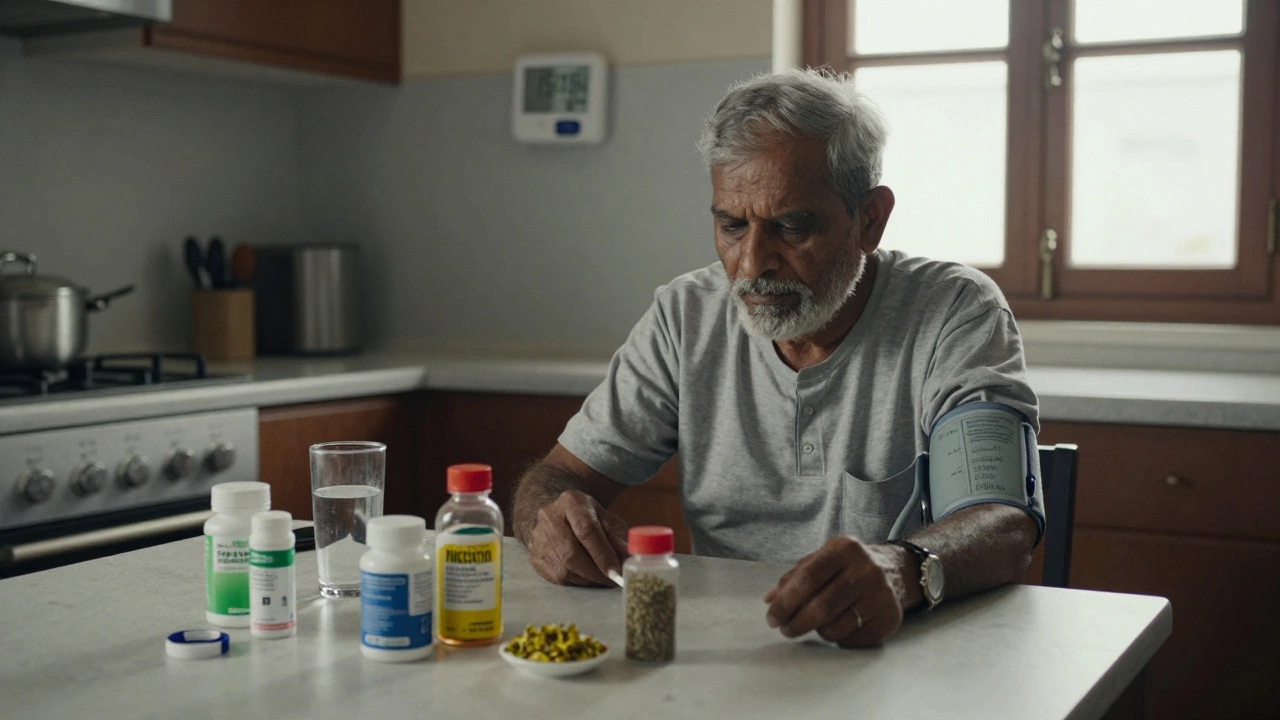
What about "kidney cleanse" supplements?
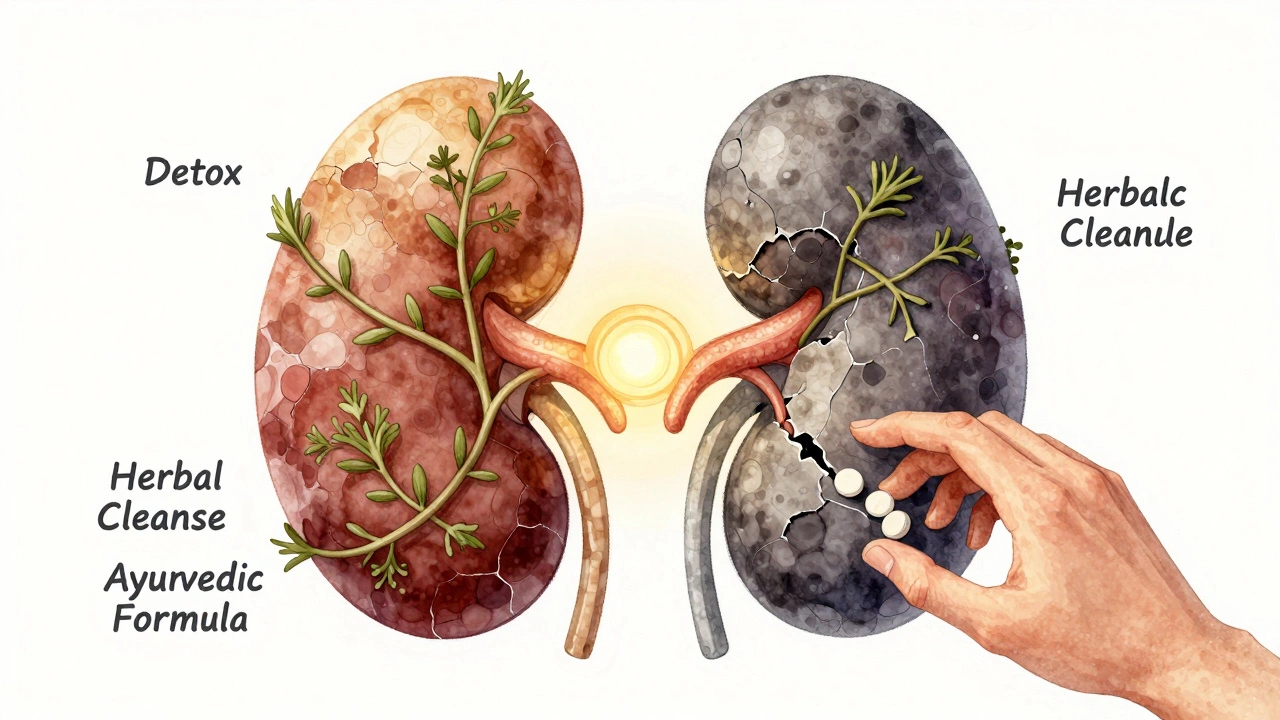
There’s a whole industry selling "kidney detox" formulas. They promise to flush toxins, improve energy, and boost kidney health. But here’s the catch: your kidneys don’t need cleaning. They’re self-cleaning organs. These supplements usually contain diuretics (like dandelion root, parsley, or juniper berry) that make you pee more. That sounds good - until you realize you’re losing electrolytes, dehydrating yourself, and forcing your kidneys to work harder.
A 2024 review in Indian Journal of Nephrology analyzed 87 cases of kidney injury linked to "detox" herbs. 73% of those cases involved people who were otherwise healthy. No underlying disease. Just daily use of a "natural cleanse."
How to protect your kidneys when taking supplements
You don’t have to quit all supplements. But you need to be smarter:
- Test before you supplement - Get your kidney function checked (serum creatinine, eGFR) before starting any new supplement. If your eGFR is below 60, avoid high-dose vitamins unless prescribed.
- Stick to RDA levels - The Recommended Dietary Allowance for vitamin C is 90 mg for men, 75 mg for women. For vitamin D, it’s 600-800 IU. Most supplements contain 1,000-5,000 IU. That’s not "extra strength" - it’s risky.
- Avoid multi-herb blends - The more herbs in one pill, the harder it is to know what’s causing harm. Single-ingredient supplements are safer.
- Drink water - At least 2 liters a day. In Bangalore’s heat, you need more. Dehydration + supplements = kidney disaster waiting to happen.
- Check labels - Look for "aristolochic acid," "bitter melon extract," "cascara sagrada," or "senna." These are red flags.
- Talk to your doctor - Especially if you have diabetes, high blood pressure, or are over 50. Many doctors don’t ask about supplements. You have to bring it up.
What vitamins are safe for kidneys?
Good news: not all vitamins are dangerous. In fact, some are essential for kidney health:
- Vitamin B6 - Helps reduce oxalate levels. Safe at normal doses (1.3-2 mg/day).
- Vitamin B12 - Often low in CKD patients. Supplementation is usually safe and helpful.
- Folic acid (B9) - Important for reducing homocysteine, which can harm blood vessels in the kidneys.
- Vitamin D (in moderation) - If your levels are low, your doctor may prescribe a low-dose form. Don’t self-prescribe.
- Omega-3 fatty acids - Found in fish oil, they reduce inflammation and may slow CKD progression. Stick to 1,000 mg EPA/DHA per day.
These are the ones you can take without fear - as long as you don’t overdo them.
What to do if you think your kidneys are affected
Signs your supplements might be hurting your kidneys:
- Swelling in ankles or face
- Foamy or bloody urine
- Constant fatigue or nausea
- Urinating less than usual
- Unexplained high blood pressure
If you notice any of these, stop all supplements immediately and get a simple blood test: serum creatinine and eGFR. You don’t need a fancy scan. A basic lab test can tell you if your kidneys are struggling. Don’t wait for pain. Kidney damage doesn’t hurt until it’s advanced.
Many people in India rely on herbal shops or online sellers for supplements. They don’t know what’s in the pills. A 2025 study in Mumbai tested 32 popular "kidney tonic" products. 19 of them contained undeclared pharmaceuticals - including diuretics and steroids. Some even had heavy metals like lead and mercury. That’s not herbal. That’s poison.
Final takeaway
Supplements aren’t harmless just because they’re natural. Your kidneys are delicate, hardworking organs. They don’t need cleaning. They need rest. Avoid high-dose vitamins, unregulated herbal blends, and "detox" products. Stick to food first. If you take supplements, keep them simple, low-dose, and under medical supervision. Your kidneys won’t thank you today - but they’ll thank you in 10 years.
 Success Rate of IVF: How Likely Is It to Work on the First Try?
 CVS or Walgreens: Which Pharmacy Is Better for Your Prescriptions?
 Can Christians Take Herbs? A Practical Guide to Herbal Supplements and Faith
 Which State Has the Cheapest IVF in the U.S.?
 Most Challenging Cardiothoracic Surgeries: Insights Into Heart Surgery Complexity