Cancer Treatment Pain Calculator
How severe is your treatment pain?
Select your cancer type and treatment to see estimated pain levels compared to other treatments
When someone hears they have cancer, the first fear isn’t always about dying. It’s about what comes next. What will their body go through? How much will it hurt? Among all the treatments-chemotherapy, radiation, surgery, immunotherapy-there’s one that stands out in patient reports as the most physically brutal: high-dose chemotherapy with stem cell transplant.
Why This Treatment Hurts More Than Others
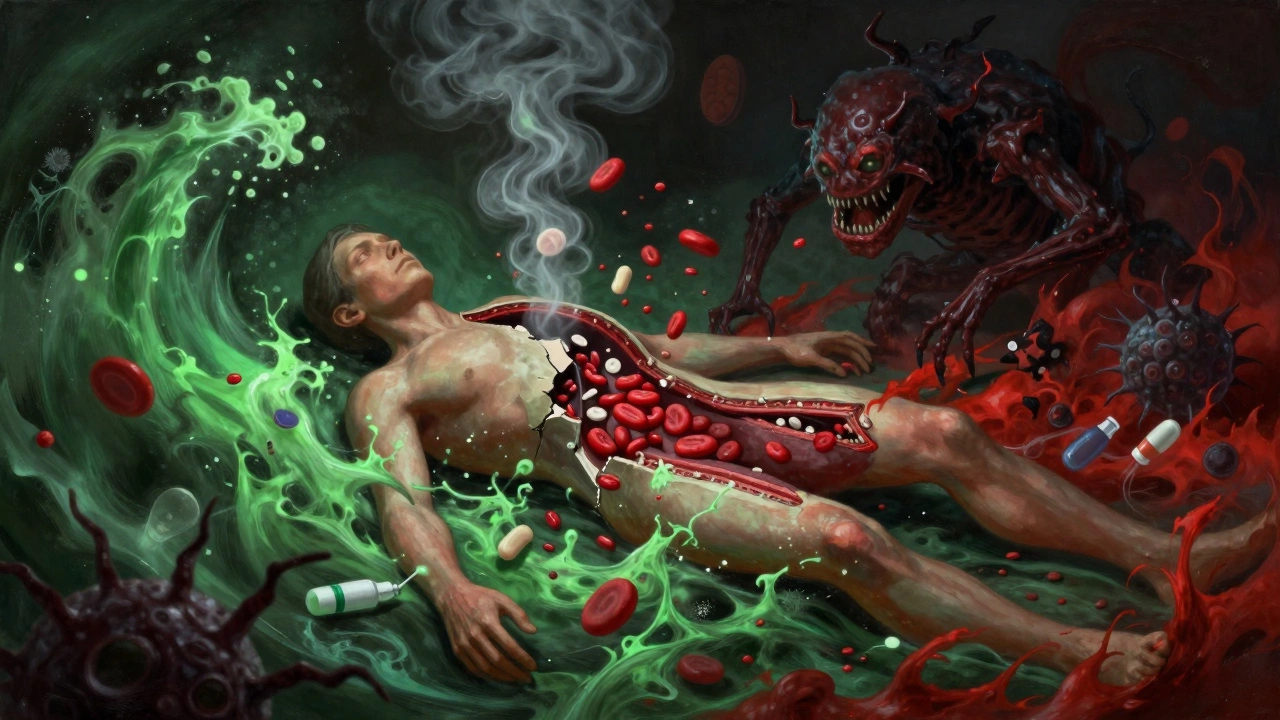
Chemotherapy alone can make you sick. Nausea, hair loss, fatigue-those are common. But high-dose chemo with stem cell transplant is a whole different level. It’s not just about killing cancer cells. It’s about wiping out your entire bone marrow. Your body’s factory for making blood cells. Red blood cells. White blood cells. Platelets. All of them. Gone.
This isn’t a one-time round of chemo. It’s a multi-week process that starts with aggressive drugs like busulfan and cyclophosphamide, sometimes combined with total body irradiation. These aren’t gentle. They’re designed to destroy everything. The goal? To make room for new, healthy stem cells to grow back. But before that can happen, you’re left defenseless.
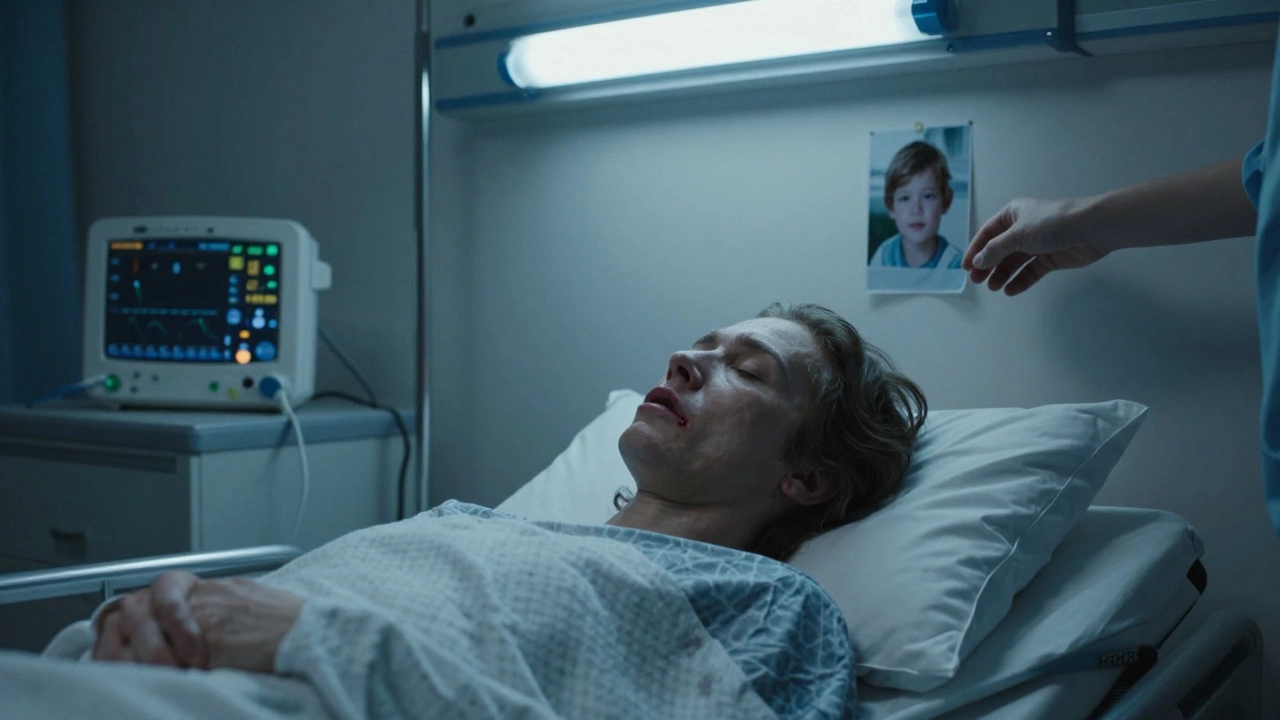
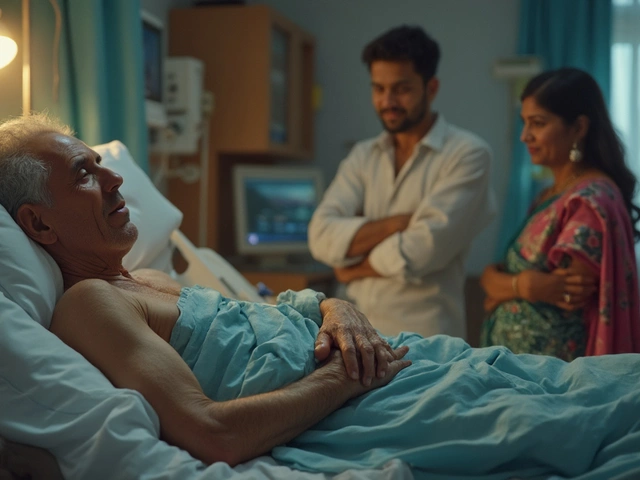
Patients describe it as being hit by a truck and then left alone in the dark. Your immune system collapses. You can’t fight off a common cold. Your mouth fills with sores so deep, swallowing water feels like swallowing glass. Your skin burns from the inside out. Diarrhea doesn’t stop. Your body feels like it’s being eaten alive.
The Real Pain Isn’t Just Physical
People talk about pain like it’s a number on a scale from 1 to 10. But this isn’t just physical pain. It’s the constant fear that you won’t survive the next 48 hours. It’s the isolation. You’re locked in a sterile room, unable to touch your family, unable to smell fresh air, unable to taste food because your mouth is raw. You’re too weak to sit up, too tired to sleep.
One patient from Mumbai, who went through this for acute leukemia, said: "I didn’t cry when I got diagnosed. I cried when I couldn’t hold my daughter’s hand because I was too weak to lift my arm." That’s the kind of pain no drug can fully touch.
How It Compares to Other Treatments
Let’s put this in perspective.
- Chemotherapy alone: Causes nausea, fatigue, hair loss. Pain is manageable with anti-nausea meds and rest.
- Radiation therapy: Can burn skin, cause fatigue, but pain is usually localized and controlled with creams or painkillers.
- Surgery: Pain after surgery is sharp but temporary. Most patients recover within weeks.
- Immunotherapy: Often causes fatigue, rashes, or flu-like symptoms. Rarely leads to severe pain.
- High-dose chemo with transplant: Pain is systemic, prolonged, and unrelenting. Lasts 3-6 weeks. Requires ICU-level care. Often needs morphine drips. Recovery takes months.
A 2023 study in the Journal of Clinical Oncology tracked pain levels across 1,200 cancer patients undergoing different treatments. The highest average pain score-8.7 out of 10-was in patients receiving high-dose chemo with stem cell transplant. The next highest? Radiation for bone metastases: 7.1. The difference isn’t small. It’s massive.
Why Doctors Still Use It
If it’s this brutal, why do it at all?
Because for some cancers, it’s the only shot at a cure.
For people with multiple myeloma, certain lymphomas, or aggressive leukemias, this treatment can mean the difference between living five years or five months. It’s not chosen lightly. But when the cancer is advanced and other options have failed, this is the last line of defense.
Doctors don’t do this because they enjoy watching patients suffer. They do it because, in many cases, it’s the only way to stop the disease from spreading. And for some, it works. About 40-60% of patients survive long-term, depending on age and cancer type.
What Helps Reduce the Pain
It’s not hopeless. Pain management has gotten better.
- Mouth sores: Special rinses with lidocaine and magic mouthwash (a mix of antacids, antihistamines, and anesthetics) help. Some hospitals now use cryotherapy-sucking on ice chips during chemo-to protect the mouth lining.
- Infection risk: Antibiotics, antifungals, and antivirals are given preemptively. Isolation rooms with HEPA filters cut infection rates by over 50%.
- Pain control: Fentanyl patches, patient-controlled morphine pumps, and nerve blocks are standard now. Ketamine infusions are being tested for severe, treatment-resistant pain.
- Emotional support: Therapy, virtual family visits, and even music therapy have been shown to reduce perceived pain by up to 30%.
One hospital in Bangalore started a "Pain Mapping" program where nurses check in every two hours-not just for pain levels, but for what kind of pain it is: burning, stabbing, aching. They adjust meds based on that. Patients report feeling more in control. Less alone.
It’s Not the Only Painful Option
Let’s be clear: other treatments can be brutal too.
For example, radiation to the pelvis for cervical or prostate cancer can cause severe rectal burns and chronic pain. Surgery for advanced pancreatic cancer often leaves patients with lifelong digestive issues and nerve pain. Some targeted therapies cause intense skin rashes that feel like third-degree burns.
But none of them combine the total body collapse, the loss of immunity, the prolonged suffering, and the emotional toll like high-dose chemo with transplant.
It’s the most painful because it doesn’t just attack cancer. It attacks your body’s ability to heal itself.
What Comes After
Survivors of this treatment don’t just bounce back. Recovery takes 6 to 12 months. Many never fully regain their strength. Some develop chronic pain, nerve damage, or secondary cancers later. But for many, it was worth it.
A 52-year-old woman from Hyderabad, who beat multiple myeloma after this treatment, said: "I lost 40 pounds. I couldn’t walk. I cried every day. But I held my grandson’s hand for the first time last week. That’s the day I knew I didn’t give up for nothing."
The pain is real. The fear is real. But so is the hope.
Is chemotherapy the most painful cancer treatment?
Not all chemotherapy is equally painful. Standard chemo causes side effects like nausea and fatigue, but it’s usually manageable. The most painful form is high-dose chemotherapy followed by stem cell transplant. This treatment wipes out your bone marrow, leaving you without immunity, with severe mouth sores, and intense pain that can last weeks. It’s far more brutal than routine chemo.
Does radiation therapy hurt more than chemo?
Radiation therapy usually causes localized pain, like skin burns or soreness in the treated area. It doesn’t affect your whole body like high-dose chemo does. While radiation for bone metastases can be very painful, it rarely causes the systemic collapse seen with stem cell transplants. Most patients find radiation easier to tolerate than high-dose chemo.
Can pain from cancer treatment be controlled?
Yes, but it takes a team. Modern pain management includes strong painkillers like fentanyl and morphine, nerve blocks, and even ketamine infusions. Mouth sores are treated with special rinses, and infection prevention is now standard. Emotional support, therapy, and music therapy also help reduce how much pain patients feel. The key is speaking up early and often-don’t wait until the pain is unbearable.
Why do doctors choose such a painful treatment?
Because for some cancers-like aggressive leukemia, multiple myeloma, or certain lymphomas-it’s the only treatment that can cure the disease. While it’s extremely hard on the body, it can destroy cancer cells that other treatments can’t reach. For many patients, the chance of long-term survival outweighs the short-term suffering.
How long does the pain last after a stem cell transplant?
The worst pain usually lasts 3 to 6 weeks, while your immune system rebuilds. But recovery doesn’t end there. Many patients deal with fatigue, nerve pain, or digestive issues for 6 to 12 months. Some never fully return to how they felt before treatment. Still, for many, this is the path to beating cancer.
 Essential Annual Blood Tests for Optimal Health
 Can You Kneel After Knee Replacement? What Really Happens and When You Can Expect to Kneel Again
 Why Am I So Angry After Open-Heart Surgery?
 Top 5 Cancer Treatments Explained: Latest Advances and What to Expect
 What Is a Vata Person Like? Ayurvedic Traits, Behaviors, and Daily Balance Tips