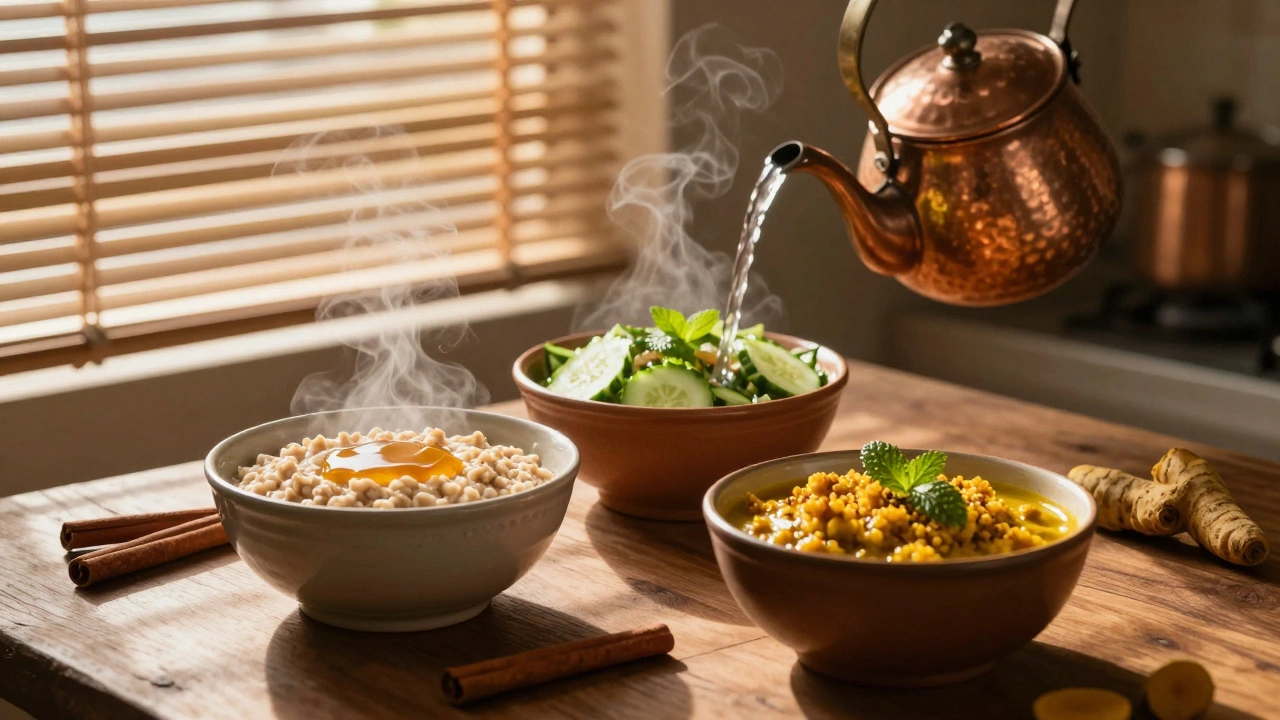
Ayurvedic Dosha Identifier
Answer 5 questions to identify your dominant ayurvedic dosha and get personalized food recommendations. Your results will help you understand what foods support your unique biology.
Most diets tell you what to eat. An ayurvedic diet tells you why you should eat it - based on your body, your environment, and your daily rhythm. It’s not about counting calories or cutting out carbs. It’s about matching your food to your unique biology. This system, over 5,000 years old, comes from India and is still used by millions today. If you’ve tried every trendy diet and still feel off, the ayurvedic diet might be the missing piece.
What Are the Three Doshas?
Ayurveda says everyone has a mix of three energies, called doshas: Vata, Pitta, and Kapha. These aren’t just abstract ideas - they’re physical and mental patterns you can see in yourself. Your dominant dosha shapes your digestion, energy levels, sleep, and even how you handle stress.
Vata is air and space. People with strong Vata tend to be thin, energetic, and quick-thinking. But they also get cold easily, have irregular hunger, and may feel anxious. Pitta is fire and water. These folks burn hot - they’re focused, ambitious, and have strong digestion. But they can get irritable, experience heartburn, or break out in rashes. Kapha is earth and water. These individuals are steady, calm, and strong. But they can gain weight easily, feel sluggish, or get stuck in routines.
Your dosha isn’t just your personality. It’s your biology. And your diet should match it.
How the Ayurvedic Diet Works
Forget one-size-fits-all meal plans. In ayurveda, the same food can help one person and hurt another. Take dairy. For a Kapha-dominant person, milk and cheese can cause congestion and weight gain. But for a Vata person, warm milk with cinnamon at night can calm nerves and improve sleep. It’s not that dairy is good or bad - it’s about how your body reacts to it.
The ayurvedic diet uses six tastes to balance the doshas: sweet, sour, salty, bitter, pungent, and astringent. Each taste affects the doshas differently. For example, sweet (like rice or dates) calms Vata and Pitta but can aggravate Kapha. Bitter (like kale or turmeric) cools Pitta and clears toxins, but can overstimulate Vata if eaten too much.
Food isn’t just fuel. It’s medicine. And the timing matters as much as the type. Ayurveda recommends eating your largest meal at noon, when your digestive fire (agni) is strongest. Breakfast should be light. Dinner should be small and finished at least three hours before bed.
What to Eat for Each Dosha
Here’s what works for each body type - not as rigid rules, but as starting points.
Vata: Warm, Moist, Grounding
Vata types need warmth and regularity. Cold salads, raw veggies, and carbonated drinks make them feel ungrounded. Focus on cooked foods: soups, stews, oatmeal, rice, and warm spiced milk. Add healthy fats like ghee, avocado, and olive oil. Sweet fruits like bananas and cooked apples help. Avoid dried fruit, crackers, and cold drinks. A pinch of ginger or cumin in meals keeps digestion steady.
Pitta: Cooling, Calming, Mild
Pitta people burn hot - literally. Spicy, fried, or overly sour foods make them angry, acidic, or break out. They do best with cooling, hydrating foods: cucumber, melon, coconut water, leafy greens, and sweet grains like barley. Avoid chili, garlic, vinegar, and coffee. Sweet, bitter, and astringent tastes balance Pitta. Drink room-temperature water throughout the day. A mint tea after meals helps soothe digestion.
Kapha: Light, Dry, Spicy
Kapha types need stimulation. Heavy, oily, sweet foods make them feel slow and stuffed. Skip dairy, fried foods, and desserts. Focus on legumes, bitter greens, light grains like quinoa, and spices like black pepper, ginger, and turmeric. Eat smaller portions. Skip snacks between meals. Warm water with lemon in the morning kickstarts metabolism. Honey is the only sweetener recommended - it’s light and helps clear mucus.
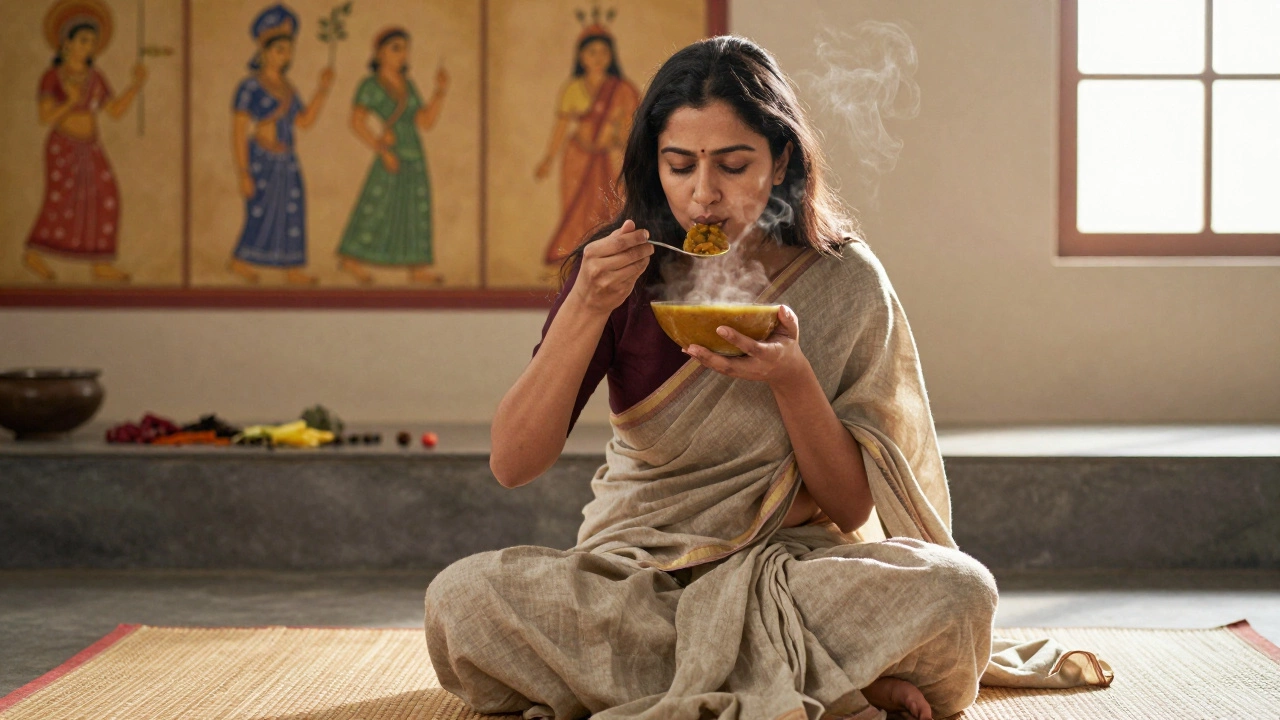
Common Ayurvedic Eating Practices
There’s more to ayurveda than just what’s on your plate.
- **Eat mindfully.** Sit down. Turn off screens. Chew each bite 20-30 times. Ayurveda says digestion starts in the mouth - not the stomach.
- **Don’t eat when upset.** Stress shuts down digestion. If you’re angry, anxious, or rushed, wait. Your body can’t process food well in those states.
- **Use spices.** Turmeric, cumin, coriander, fennel - they’re not just flavor. They aid digestion, reduce inflammation, and balance doshas. A simple rice dish with cumin and turmeric is more healing than a kale salad with no seasoning.
- **Drink warm water.** Cold water puts out your digestive fire. Warm water (not hot) helps flush toxins and keeps things moving.
- **Fasting helps.** Once a week, skip dinner or eat only light soup. This gives your digestive system a break. It’s not about starvation - it’s about resetting.
What to Avoid
Some foods are universally discouraged in ayurveda, no matter your dosha.
- **Processed sugar.** It creates toxins (ama) and throws off all doshas.
- **Leftovers over 24 hours.** They lose prana (life energy) and become hard to digest.
- **Combining dairy with fruit.** Milk and berries? That’s a no. It causes fermentation in the gut.
- **Ice in drinks.** Even in summer. It dampens digestion.
- **Overeating.** Fill only two-thirds of your stomach. Leave space for digestion.

Real-Life Examples
Take Priya, 34. She’s a Pitta type - sharp, driven, and always on her phone. She eats salads for lunch, iced tea, and snacks on chips. She gets heartburn by 3 p.m. and can’t sleep. Her ayurvedic fix? Switched to warm lentil soup for lunch, added fennel tea after meals, and stopped drinking cold beverages. Within two weeks, her acid reflux vanished. She sleeps better. Her skin cleared up.
Then there’s Raj, 48. He’s Kapha-dominant. He eats big dinners, loves bread and sweets, and feels tired after lunch. His ayurvedic shift: swapped white rice for quinoa, dropped dessert, and started walking 20 minutes after dinner. He lost 12 pounds in three months - not by starving, but by eating in rhythm with his body.
Is It Right for You?
You don’t need to become an ayurvedic expert to start. Try this: for one week, eat your meals at the same time every day. Skip ice in drinks. Add one spice you don’t usually use - like cumin or ginger. Notice how you feel after eating.
If you’re tired after meals, bloated, or always craving sugar, your diet might be out of sync with your body. The ayurvedic diet doesn’t promise quick weight loss. It promises balance. Energy that lasts. Sleep that restores. Digestion that works.
It’s not about perfection. It’s about awareness. Eat when you’re hungry. Stop when you’re full. Choose food that feels good, not just trendy. That’s the heart of ayurveda.
Can I follow an ayurvedic diet if I’m vegetarian?
Yes. Ayurveda has a long tradition of plant-based eating. Most ayurvedic meals are vegetarian, focusing on grains, legumes, vegetables, and spices. Dairy like ghee and milk is often included, but you can substitute with plant-based alternatives like almond milk or coconut yogurt if needed. The key is matching the food’s qualities to your dosha, not the source.
Do I need to give up coffee on an ayurvedic diet?
It depends on your dosha. Pitta types should avoid it - it heats the body and increases acidity. Vata types can have small amounts in the morning if they add ghee or cinnamon to calm its stimulating effect. Kapha types can handle it occasionally, but it’s better to replace it with herbal teas like ginger or tulsi. If you keep coffee, drink it black, warm, and never on an empty stomach.
Is the ayurvedic diet safe for people with diabetes?
Yes - if done carefully. Ayurveda avoids refined sugar and processed carbs, which helps stabilize blood sugar. Focus on whole grains like barley and millet, bitter greens, and legumes. Avoid sweet fruits like mango and banana if your blood sugar is high. Warm water with fenugreek seeds in the morning is a traditional ayurvedic aid for glucose balance. Always monitor your levels and consult your doctor before making changes.
How long does it take to see results from an ayurvedic diet?
Most people notice changes in digestion, energy, or sleep within 7-14 days. That’s when your body stops fighting the food you’re eating. Deeper changes - like weight balance, clearer skin, or better mood - take 4-8 weeks. Ayurveda works slowly because it’s rebuilding your internal rhythm, not forcing a quick fix.
Can I combine an ayurvedic diet with other diets like keto or vegan?
It’s possible, but risky. Keto is high-fat and low-carb - that can overstimulate Vata and Pitta. Vegan diets can be too cold and dry, which worsens Vata. Ayurveda values balance over extremes. If you’re vegan, focus on warm, cooked meals with healthy fats and spices. If you’re keto, avoid overly spicy or dry foods and add more grounding options like root vegetables and ghee. Listen to your body - not the diet label.
Next Steps
Start small. Pick one dosha tip that matches how you feel. If you’re always cold and anxious, try warm ginger tea in the morning. If you’re hot-headed and prone to heartburn, swap your afternoon coffee for mint tea. If you feel sluggish after meals, skip dessert and take a walk.
Keep a journal for two weeks. Note what you ate, when you ate it, and how you felt afterward. You’ll start to see patterns. That’s the real power of ayurveda - you become your own best healer.
 What Is the Fastest Killing Cancer?
 Top Hospitals for Orthopedic Surgeries You Should Know About
 What Herbs Increase Blood Pressure? Top 7 Herbs to Avoid if You Have Hypertension
 Best Diabetic Pill: Why Metformin Is Still the Leading Diabetes Medication
 Which Country Has the Highest Disease Burden?