Nerve Damage Recovery Calculator
Estimated Recovery Time
How Nerve Recovery Works
Nerves regenerate at approximately 1 millimeter per day (about 1 inch per month). This means:
- Neuropraxia (bruised nerve): Typically heals within 2-12 weeks
- Axonotmesis (damaged fibers): May take 6-12 months
- Neurotmesis (severed nerve): Requires surgery and can take 9-18 months
Timing matters: Nerve damage is most likely to repair well within the first 6 months. After that, recovery becomes more difficult.
When you feel tingling in your fingers that won’t go away, or your foot just won’t respond when you try to lift it, it’s easy to wonder: can my nerve damage be repaired? The answer isn’t simple, but it’s not hopeless either. Nerve damage doesn’t heal like a cut or a broken bone. It’s slower, trickier, and often misunderstood. But in many cases-especially when caught early-it can be repaired, restored, or at least significantly improved.
How Nerves Heal (or Don’t)
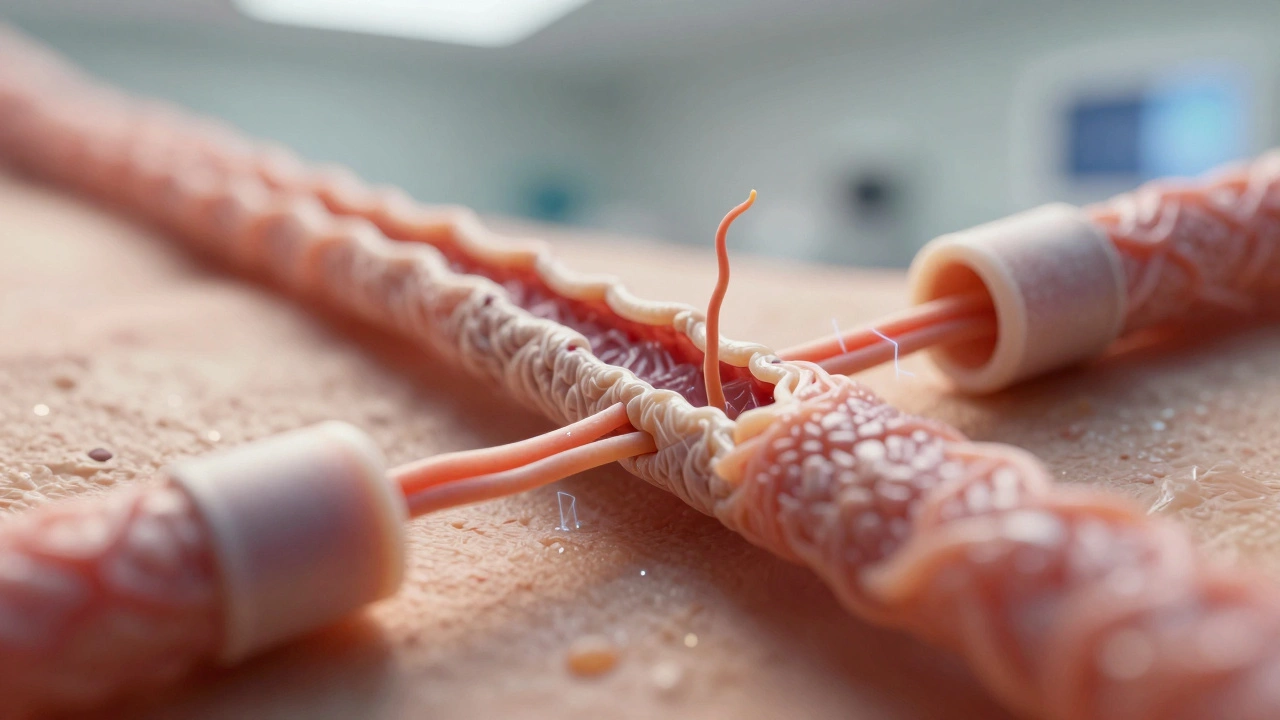
Nerves are like electrical wires wrapped in insulation. When they’re crushed, cut, or stretched, the signal from your brain to your muscles or skin gets interrupted. The good news? Nerves can regenerate. The bad news? They grow back at about 1 millimeter per day-roughly an inch per month. That means recovery takes time, and not all damage can be undone.
There are three main types of nerve injuries:
- Neuropraxia: The nerve is bruised or compressed but not torn. This is the most common and usually heals on its own within weeks to months.
- Axontmesis: The nerve’s inner fibers are damaged, but the outer sheath stays intact. Recovery is possible but slower, often requiring physical therapy.
- Neurotmesis: The nerve is completely severed. This requires surgery to reconnect the ends. Without intervention, full recovery is unlikely.
Most people with mild nerve damage from car accidents, sports injuries, or even prolonged pressure (like from sitting wrong for hours) fall into the first two categories. Their nerves can recover-sometimes without any treatment at all.
When Surgery Is Needed
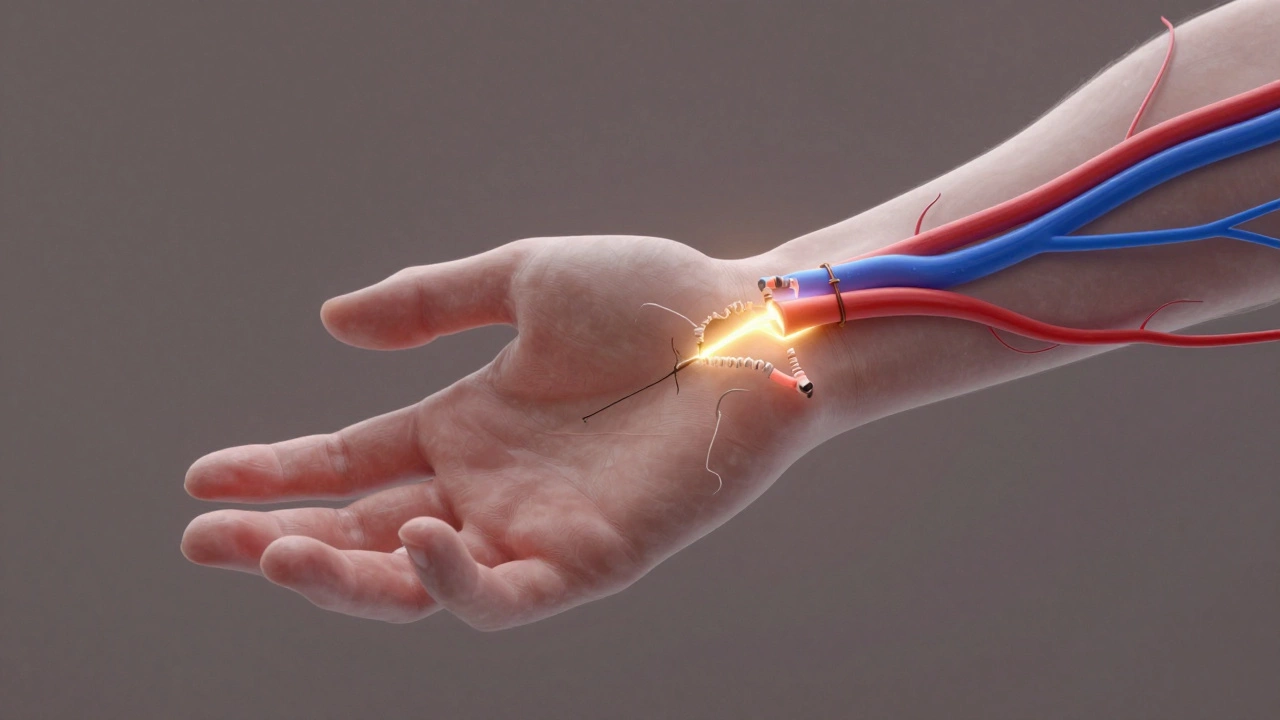
If your nerve is cut or badly crushed, surgery may be the only way to restore function. Surgeons use microscopes and tiny stitches to reconnect the ends of the nerve. In more severe cases, a nerve graft might be needed-taking a piece of nerve from another part of your body (often the calf or forearm) to bridge the gap.
Success rates vary. For a clean cut repaired within days, up to 80% of patients regain useful function. But if the injury is old-say, more than six months-and the nerve has started to shrink or scar, even surgery may only help partially. That’s why timing matters. Waiting too long reduces your chances.
At major orthopedic centers in Bangalore, surgeons now use advanced techniques like nerve conduits-biodegradable tubes that guide nerve regrowth-and electrical stimulation to speed up healing. These aren’t magic, but they’ve improved outcomes for thousands.
What Happens After Surgery?
Surgery isn’t the end-it’s just the beginning. After a nerve repair, you’ll need months of rehab. Nerves don’t just reconnect; your brain has to relearn how to use them. That’s where physical therapy comes in.
Therapy includes:
- Muscle re-education: Exercises to retrain muscles that haven’t received signals in months.
- Sensory retraining: Learning to interpret tingling, numbness, or new sensations as normal signals again.
- Scar management: Massaging and stretching to prevent scar tissue from blocking nerve growth.
Many patients report strange sensations during recovery-pins and needles, burning, or even pain where there was once numbness. That’s not a bad sign. It means the nerve is waking up. But if the pain gets worse or spreads, you need to check in with your doctor.
Non-Surgical Options That Actually Work
Not everyone needs surgery. If your nerve damage is mild or you’re not a surgical candidate, there are still effective options.
One of the most proven non-surgical methods is low-level laser therapy (LLLT). Studies from the Indian Journal of Orthopaedics show that patients with carpal tunnel syndrome or diabetic neuropathy who received weekly LLLT sessions for 8-12 weeks saw measurable improvement in nerve conduction speed and reduced pain.
Another option is transcutaneous electrical nerve stimulation (TENS). It doesn’t repair the nerve, but it can help manage pain and keep muscles active while healing happens.
And don’t underestimate nutrition. Vitamin B12, B6, and alpha-lipoic acid support nerve health. If you’re diabetic, controlling your blood sugar is the single most important thing you can do to stop further damage. Many patients don’t realize their nerve pain is tied to blood sugar levels that have been creeping up for years.
What Doesn’t Work
There’s a lot of misinformation out there. Don’t waste time or money on:
- Herbal creams that claim to "repair nerves overnight"-they don’t penetrate deep enough.
- Unregulated stem cell injections-no credible evidence supports their use for peripheral nerve repair in humans yet.
- Waiting it out without evaluation-nerve damage doesn’t get better on its own if it’s severe.
Some people try acupuncture or massage therapy. These can help with pain and circulation, but they won’t fix a severed nerve. Use them as support, not a solution.

How to Know If You’re a Candidate for Repair
Here’s a simple checklist:
- Did the injury happen less than 6 months ago?
- Do you have muscle weakness or loss of sensation in a specific area?
- Have you tried basic rest and physical therapy for 4-6 weeks with no improvement?
- Are you otherwise healthy with no major chronic conditions like uncontrolled diabetes?
If you answered yes to most of these, you should see a specialist. A nerve conduction study or EMG (electromyography) can show exactly how damaged the nerve is-and whether repair is still possible.
Real Stories, Real Outcomes
A 42-year-old construction worker in Bangalore fell from a ladder and severed a nerve in his wrist. He waited three months before seeing a doctor. By then, the nerve had retracted. Surgery was done, but he only regained 60% of grip strength. He now uses adaptive tools at work.
Another patient, a 35-year-old teacher, had carpal tunnel for two years. She ignored it until her fingers went numb during class. After a nerve release and six months of therapy, she regained full sensation and returned to writing on the board.
The difference? Timing.
What to Do Next
If you’re wondering whether your nerve damage can be repaired, don’t wait. Here’s what to do now:
- See an orthopedic specialist or neurologist within 4-6 weeks of noticing symptoms.
- Request a nerve conduction study or EMG to measure the damage.
- Get a clear diagnosis: Is it compression, trauma, or disease-related?
- Ask about surgery options-and if you’re eligible.
- Start physical therapy even if you’re waiting for surgery.
The longer you wait, the harder it gets. But if you act now, especially within the first few months, your chances of recovery are much higher than you think.
Can nerve damage heal on its own?
Yes, but only if it’s mild. Minor compression or bruising (neuropraxia) often heals within weeks. But if the nerve is cut or severely crushed, it won’t repair itself without medical help. Waiting too long can make recovery impossible.
How long does nerve repair take?
Nerves grow back at about 1 mm per day. So if a nerve was damaged halfway down your arm, recovery could take 6-12 months. Full function may take even longer because your brain needs to relearn how to use the signals. Patience and consistent therapy are key.
Is nerve surgery risky?
Nerve surgery is delicate, but it’s routine in major orthopedic centers. Risks include infection, scar tissue blocking regrowth, or incomplete recovery. But success rates are high when done early by experienced surgeons. The bigger risk is doing nothing.
Can diabetes affect nerve repair?
Absolutely. High blood sugar damages nerves over time and slows healing. If you’re diabetic, repairing a nerve won’t work well unless your sugar levels are tightly controlled. Many patients need to stabilize their diabetes before even considering surgery.
Will I ever feel normal again?
It depends on how bad the damage was and how soon you treated it. Many people regain near-normal function, especially with early surgery and therapy. Some may have lingering numbness or sensitivity to cold. But most return to daily life without major limitations.
 What Is the Number 1 Unhealthy Food in the World?
 What Is the Most Expensive Surgery? Costs, Reasons, and What It Includes
 Unveiling the World's Most Common Illness and Its Impact on Medical Tourism
 Who Should Avoid Dental Implants? Know the Key Risks and Alternatives
 Understanding Bone Surgery: Procedures and Healing in Orthopedics