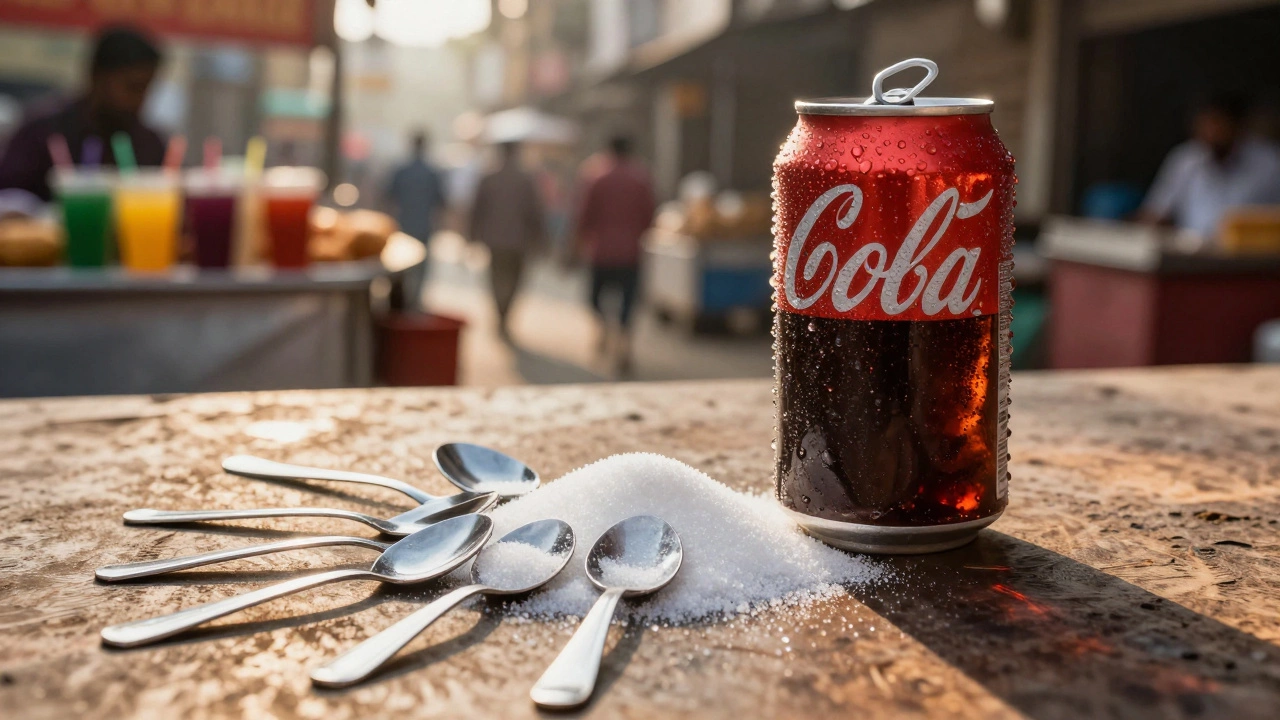
Sugary Beverage Sugar Calculator
How much sugar are you drinking?
Sugary drinks contain 39g of sugar per can - more than WHO's daily limit. Calculate your intake and see potential health risks.
There’s no single food that’s officially crowned the "unhealthiest" by global health agencies-but if you look at the data, one item stands out for how widely it’s consumed, how deeply it damages health, and how little nutritional value it offers: industrially produced sugary beverages.
Why sugary drinks are the worst offender
A can of soda isn’t just a sweet treat. It’s 39 grams of sugar-nearly 10 teaspoons-in a single serving. That’s more than the entire daily limit recommended by the World Health Organization for added sugars. And it’s not just soda. Energy drinks, sweetened teas, fruit-flavored drinks, and even some "sports" drinks pack the same punch.
Unlike solid food, liquid sugar doesn’t trigger the same fullness signals in your brain. You can drink 200 calories of soda and still feel hungry. That’s why people who drink one or more sugary beverages a day are 26% more likely to develop type 2 diabetes, according to a 2013 Harvard study tracking over 150,000 adults. The same group found a 20% higher risk of heart disease.
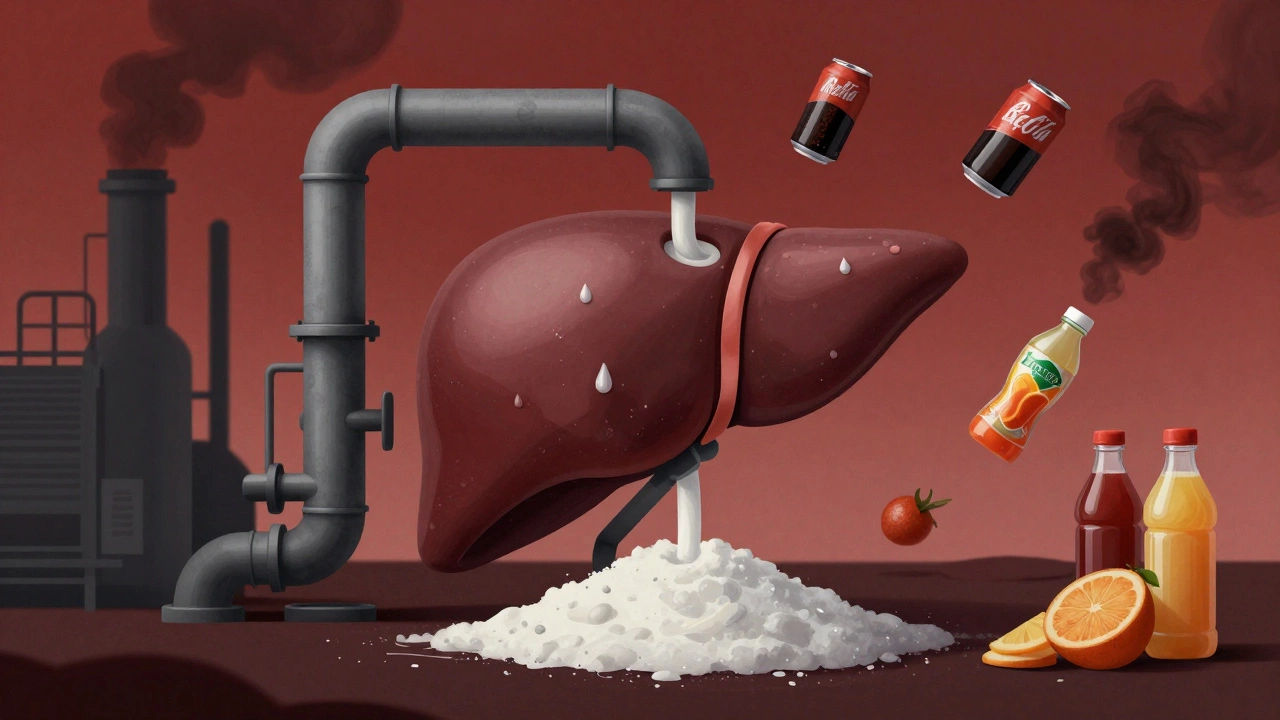
It’s not just about calories. The fructose in these drinks goes straight to your liver. When you overload it with sugar, your liver turns the excess into fat. That fat builds up around your organs, leading to non-alcoholic fatty liver disease-a condition now affecting nearly 1 in 3 adults globally. And unlike alcohol-related liver damage, this one happens even in people who never drink.
How it compares to other "unhealthy" foods
People often point to fried chicken, bacon, or donuts as the worst. But here’s the catch: those foods can be eaten occasionally without causing major harm. A burger once a week? Fine. A soda every day? That’s a daily toxin.
Trans fats, banned in many countries, were once the top villain. They raised bad cholesterol and lowered good cholesterol, increasing heart disease risk. But even the worst trans fat-laden snack foods don’t deliver the same volume of sugar, or the same constant, low-dose metabolic damage, as a daily soda.
Processed snacks like chips and cookies are high in salt and fat, but they also contain some fiber, protein, or micronutrients. Sugary drinks? Nothing. Just sugar, water, color, and flavoring. No protein. No fiber. No vitamins. No minerals. Just empty calories that rewire your taste buds to crave more.
The global spread of sugar addiction
This isn’t just a Western problem. In Mexico, the average person drinks 163 liters of sugary beverages a year-more than any other country. In India, sales of packaged sugary drinks have tripled since 2010. In South Africa, over 40% of children drink soda daily. The global sugar-sweetened beverage market is worth over $1.2 trillion-and it’s growing.
Why? Because it’s cheap, heavily marketed, and designed to be addictive. Companies spend billions on ads targeting kids, athletes, and low-income communities. They rebrand sugar water as "energy," "hydration," or "refreshment." But the science is clear: these drinks are a public health emergency.
What happens when you quit
People who stop drinking sugary beverages often see dramatic changes in under 30 days. Blood sugar levels drop. Liver fat decreases. Energy becomes more stable-no more mid-afternoon crashes. Weight loss follows naturally, even without changing anything else.
A 2019 study in the British Medical Journal tracked 100 overweight adults who replaced sugary drinks with water for six months. They lost an average of 4.5 kilograms without dieting or exercising. Their insulin resistance improved by 20%. Their triglycerides dropped by 30%.
It’s not magic. It’s just removing a daily dose of poison.
What to drink instead
You don’t need to go cold turkey. Start by cutting back. Swap one soda a day for sparkling water with a squeeze of lemon. Or try unsweetened iced tea. Herbal teas, infused water with mint or cucumber, and plain seltzer are all better choices.
Even 100% fruit juice isn’t a good replacement. A glass of orange juice has the sugar of four oranges, without the fiber. Whole fruit is the real answer. If you crave sweetness, eat an apple. It’s got sugar-but also fiber, water, and nutrients that slow absorption and satisfy hunger.
The hidden cost
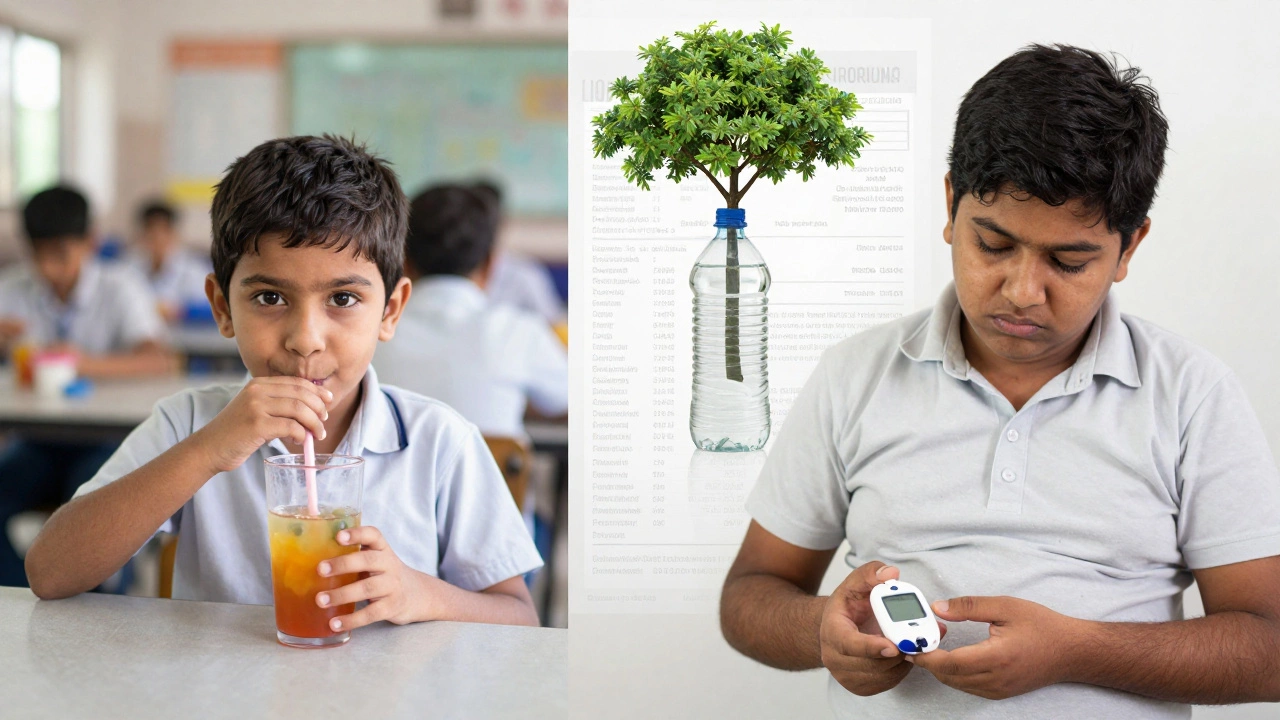
The real tragedy isn’t just personal health. Sugary drinks cost healthcare systems billions. In the U.S. alone, medical costs tied to sugary drink consumption exceed $100 billion a year. That’s money spent on treating diabetes, heart disease, liver failure, and tooth decay-all preventable.
Some countries have fought back. Mexico and the UK imposed soda taxes. In Mexico, sales dropped 12% in the first year. In the UK, manufacturers reformulated products to cut sugar to avoid the tax. Over 50% of sugary drinks on shelves now have less than half the sugar they did five years ago.
Change is possible. But it starts with recognizing the truth: no beverage deserves a place in your daily routine if it delivers nothing but sugar and harm.
Final thought
The number one unhealthy food isn’t a burger. It’s not a candy bar. It’s the drink you grab without thinking-because it’s cheap, convenient, and marketed as harmless. But your body knows better. Every sip is a signal: this isn’t food. It’s fuel for disease.
Ask yourself: Do you really need another 150 calories of pure sugar? Or can you choose something that actually nourishes you?
Is diet soda a healthy alternative to regular soda?
Diet soda replaces sugar with artificial sweeteners like aspartame or sucralose. While it has no calories, research suggests these sweeteners may still disrupt your metabolism and keep your brain craving sugar. Some studies link them to increased belly fat and higher risk of type 2 diabetes-even without weight gain. Water, sparkling water, or unsweetened tea are safer choices.
Can children drink sugary beverages occasionally?
Occasional consumption isn’t catastrophic, but it sets a dangerous precedent. Children’s taste buds are more sensitive to sweetness, and early exposure increases lifelong preference for sugary foods. The American Academy of Pediatrics recommends no sugary drinks for kids under two, and limits them to no more than 4 ounces per week after that. Water and milk are the only drinks children truly need.
Why are sugary drinks worse than eating candy?
When you eat candy, you chew it, and your body gets signals that you’re consuming something. That triggers fullness hormones. With sugary drinks, you swallow it quickly-no chewing, no fullness cues. You can drink the sugar equivalent of a whole candy bar without feeling full. That makes it far easier to consume dangerous amounts daily.
Do sports drinks really need sugar?
Only for elite athletes doing intense exercise for over 90 minutes. For most people, including casual gym-goers and students, water is enough. Sports drinks are designed for endurance athletes who lose electrolytes through heavy sweating. For everyone else, they’re just sugar water with added salts and dyes. You don’t need them.
What about fruit juice?
Even 100% fruit juice is concentrated sugar without fiber. A single glass of orange juice contains the sugar of 4-5 oranges. Your body processes it like soda-fast, with no fiber to slow absorption. Whole fruit is always better. If you drink juice, limit it to 4 ounces a day and dilute it with water.
If you’re trying to improve your health, start here: stop drinking sugary beverages. It’s the single most effective dietary change you can make-and it doesn’t require willpower, meal prep, or a diet plan. Just choose water instead.
 Top Herbal Supplements for Boosting Your Health in 2025
 Is Going to Mexico for Surgery Safe? What You Need to Know
 Understanding Chemotherapy's Impact on Long-Term Recovery
 How Long Does Heart Surgery Take? Timing, Tips, and What to Expect
 What Is the Most Painful Cancer Treatment?