Ayurvedic Food Combination Checker
Enter two foods to check if they're recommended to be eaten together according to Ayurvedic principles.
Examples:
Ever eaten a banana with milk and felt bloated afterward? Or had a bowl of yogurt at night and woke up with a heavy head? These aren’t just coincidences. In Ayurveda, how you combine foods matters just as much as what you eat. Ancient Indian wisdom teaches that certain food pairings don’t just upset digestion-they can create toxins, imbalance your doshas, and slowly weaken your immunity over time.
Why Food Combinations Matter in Ayurveda
Ayurveda doesn’t see food as just calories or nutrients. It sees food as energy-with qualities that either harmonize or clash. Each food has its own virya (thermal effect), rasa (taste), and vipaka (post-digestive effect). When two foods with opposing qualities are eaten together, digestion gets confused. The body can’t process them efficiently, leading to ama-a sticky, toxic residue that clogs channels and triggers inflammation, fatigue, and disease.
Think of it like mixing oil and water. They don’t blend. Your digestive fire, or agni, works best when it’s handling one type of food at a time. Mixing conflicting foods is like asking a chef to cook a curry and a cake in the same pot. The result? A mess.
Top 7 Food Combinations to Avoid
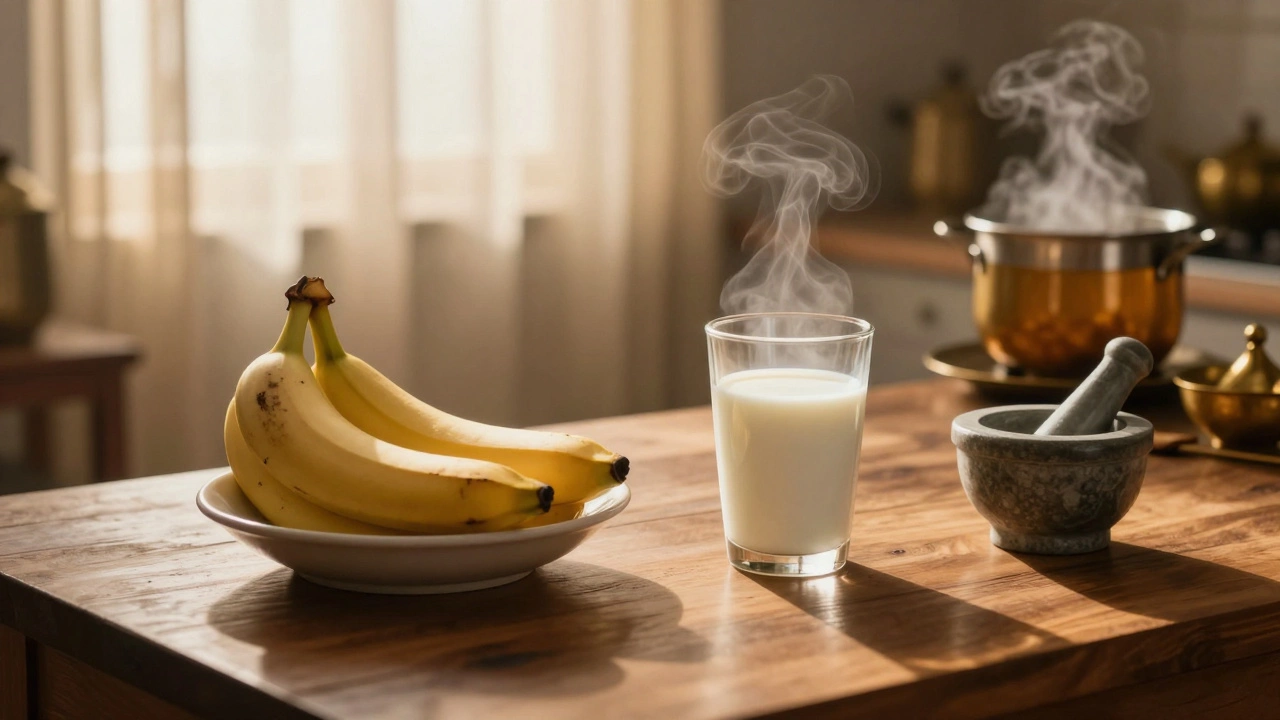
- Banana and Milk - This is one of the most common mistakes. Banana is cooling and heavy, while milk is also cooling and mucous-forming. Together, they dull digestion, create congestion in the respiratory tract, and can trigger sinus issues or allergies. In Ayurveda, this combo is called viruddha ahara-a harmful pairing. Many people who suffer from chronic coughs or colds don’t realize their daily banana smoothie is the culprit.
- Yogurt and Fruit - Especially citrus fruits like oranges, lemons, or pineapple. Yogurt is fermented and acidic, while fruits are high in natural sugars and enzymes. When combined, they ferment in the gut, leading to gas, bloating, and acid reflux. Even apples or berries with yogurt can cause digestive discomfort. If you love yogurt, eat it plain or with cooked fruits like stewed pears or apples.
- Milk and Fish - Milk is a dairy product with a sweet, cooling nature. Fish is a protein with a salty, heating effect. Mixing them creates a chemical imbalance in the digestive system. Ayurvedic texts like the Charaka Samhita warn this combination can cause skin disorders, rashes, and even blood impurities. It’s not just about digestion-it’s about how the body processes the molecular structure of these foods.
- Honey and Ghee in Equal Proportions - Honey is hot and drying, ghee is cool and lubricating. When mixed in equal amounts, they become toxic. This rule is so strong that even a teaspoon of each mixed together is discouraged. But if honey is heated above 40°C and then mixed with ghee, it becomes even more harmful. Ayurveda advises using them separately-honey in warm water in the morning, ghee on rice or vegetables later.
- Meat and Dairy Together - Chicken, beef, or fish with cheese, paneer, or curd creates a heavy, slow-digesting meal. Animal proteins require strong acid and enzymes to break down. Dairy requires a different set of enzymes. When eaten together, they compete and stall digestion. This is why many people feel lethargic after a curry with paneer or a burger with milkshake. Stick to dairy before or after meat meals, with at least a 3-hour gap.
- Hot and Cold Foods Together - Drinking cold water right after spicy food, or eating ice cream after a hot meal, shocks the digestive system. Ayurveda says your stomach needs warmth to digest properly. Cold drinks put out the digestive fire. Even switching from hot chai to a chilled soda can trigger acidity or cramps. Wait at least 20 minutes after a warm meal before drinking anything cold.
- Starchy Foods with Protein-Rich Foods - Rice or potatoes with lentils or eggs sounds normal, but in Ayurveda, starches and proteins require different pH levels to digest. Starches need an alkaline environment, proteins need acid. When eaten together, neither digests fully. This leads to fermentation, gas, and bloating. Instead, pair rice with vegetables or dal, and eat eggs with leafy greens or roasted vegetables.
What About Common Indian Meals?
You might be thinking: “But I’ve eaten kheer (rice pudding) with nuts and milk my whole life!” Or “My grandmother always made dal with yogurt.” Ayurveda isn’t about rigid rules-it’s about awareness. Traditional meals often include spices like turmeric, cumin, or ginger that help balance the combination. A bowl of kheer with cardamom and saffron is different from a banana-milkshake with sugar and vanilla extract. The spices aid digestion.
Similarly, yogurt in dal is often added at the end, not cooked. That’s called chhach or buttermilk, which is fermented and easier to digest. The key is preparation and timing. Cooked yogurt loses its probiotic benefits and becomes harder to digest. Raw, room-temperature yogurt with spices is fine. But mixing it with fruit? That’s where the trouble starts.

How to Eat According to Ayurveda
It’s not just about avoiding bad combos-it’s about building good habits.
- Eat one main food group per meal. Focus on either grains, proteins, or vegetables-not all three together.
- Wait 3-4 hours between meals. This gives your body time to fully digest before introducing new food.
- Start meals with sweet, end with bitter. Sweet foods (like fruit or grains) are easiest to digest first. Bitter greens (like kale or neem) help cleanse the system at the end.
- Use digestive spices. Cumin, fennel, ginger, black pepper, and asafoetida help break down even tricky combinations.
- Listen to your body. If you feel bloated, tired, or sluggish after eating something, it’s a sign. Ayurveda trusts your experience over any diet chart.
What You Can Eat Together
Not all combinations are bad. Ayurveda encourages many harmonious pairings:
- Basmati rice with moong dal and ghee
- Steamed vegetables with turmeric and cumin
- Apples with cinnamon (cooked)
- Warm milk with a pinch of turmeric and cardamom (before bed)
- Grated carrot with a drop of ghee and jaggery
These combinations support digestion, nourish tissues, and balance the doshas. They’re simple, traditional, and tested over centuries.

What to Do If You’ve Already Mixed Bad Combos
Accidents happen. You ate yogurt with mango. You had a banana smoothie after breakfast. Don’t panic. Ayurveda gives you simple remedies:
- Drink warm water with a pinch of black salt and ginger powder.
- Chew a teaspoon of fennel seeds or ajwain.
- Take a 15-minute walk after meals-don’t sit or lie down.
- Have a light herbal tea like ginger-lemon or cumin-coriander-fennel (CCF tea).
These help reignite your digestive fire and flush out any toxins before they settle.
Myths About Ayurvedic Food Rules
Some say Ayurveda is outdated. Others claim it’s just superstition. But here’s the truth: modern science is catching up. Studies on food intolerances, gut microbiome imbalances, and fermentation in the gut mirror Ayurvedic warnings. The reason banana and milk cause mucus? It’s because the combination increases mucin production in sensitive individuals. The reason dairy and meat cause bloating? It’s because they slow gastric emptying and promote bacterial overgrowth.
Ayurveda didn’t need labs to know this. It knew through observation-centuries of watching how people felt after eating.
It’s not about fear. It’s about awareness. You don’t have to stop eating everything you love. You just need to understand how your body responds. Try avoiding one bad combo for a week. Notice how your digestion, energy, and skin change. That’s the real power of Ayurveda-it doesn’t tell you what to do. It shows you what’s already happening.
Can I drink milk after eating fish?
No. Ayurveda strongly advises against drinking milk after fish. Milk is cooling and milk-forming, while fish is heating and protein-dense. Together, they create an imbalance that can lead to skin issues, allergies, and digestive toxins. Wait at least 4 hours if you must have both in the same day.
Is it okay to eat fruit after meals?
No. Fruit digests fastest of all foods. Eating it after a heavy meal traps it in the stomach, where it ferments and causes gas and bloating. Eat fruit on an empty stomach, preferably in the morning. Wait 30-45 minutes before eating anything else.
Can I have honey with warm water in the morning?
Yes. Honey mixed with warm (not boiling) water is a classic Ayurvedic practice. It helps cleanse the digestive tract, kickstart metabolism, and reduce mucus. But never heat honey above 40°C or mix it with equal parts ghee-this creates toxicity.
Why is yogurt at night bad?
Yogurt is cooling and increases kapha (mucus and heaviness). At night, your digestion is naturally slower. Eating yogurt then can lead to congestion, cough, and sluggishness the next day. If you must have it, choose buttermilk with roasted cumin and ginger instead.
Are all dairy and fruit combinations bad?
Not all. Cooked fruits like stewed apples or pears with a small amount of yogurt are generally fine. Raw, juicy fruits like mango, pineapple, or oranges should never be mixed with dairy. The key is temperature, ripeness, and preparation.
Final Thought
Ayurveda isn’t about perfection. It’s about paying attention. The goal isn’t to follow a list of dos and don’ts-it’s to learn how your body speaks to you. If you feel heavy after a meal, it’s not because the food was bad. It’s because the combination didn’t match your digestion that day. Adjust. Experiment. Observe. That’s the real practice.
 Best Hospital for Nerve Damage: Picking the Right Orthopedic Care
 Are IVF babies just as healthy? The real data on long-term health outcomes
 Top Vitamins That Grow Hair Fastest: Science‑Backed Guide
 Unveiling the World's Most Common Illness and Its Impact on Medical Tourism
 Can Prescription Drugs Be Ordered Online? Your Guide to Online Pharmacies