
Knee Replacement Kneeling Readiness Calculator
Based on research showing 68% of patients can kneel without pain after 1 year, this calculator provides personalized guidance based on your recovery stage. It follows the 12-week timeline recommended by orthopedic surgeons.
Your Personalized Kneeling Timeline
Select your surgery date and recovery stage to see when you can safely start kneeling.
Safety Tips for Your Stage
Based on 1,200 patients in The Journal of Bone and Joint Surgery (2023):
Can kneel without pain after 1 year
Kneel regularly for daily activities
Avoid kneeling due to discomfort
After knee replacement, many people wonder: Can you ever kneel again? It’s not just a curiosity-it’s a real concern for those who pray, garden, clean floors, or play with their grandchildren. The truth isn’t simple. Some people kneel without pain within months. Others never feel comfortable doing it. And some doctors still give outdated advice that doesn’t match today’s reality.
Why Kneeling Feels Different After Knee Replacement
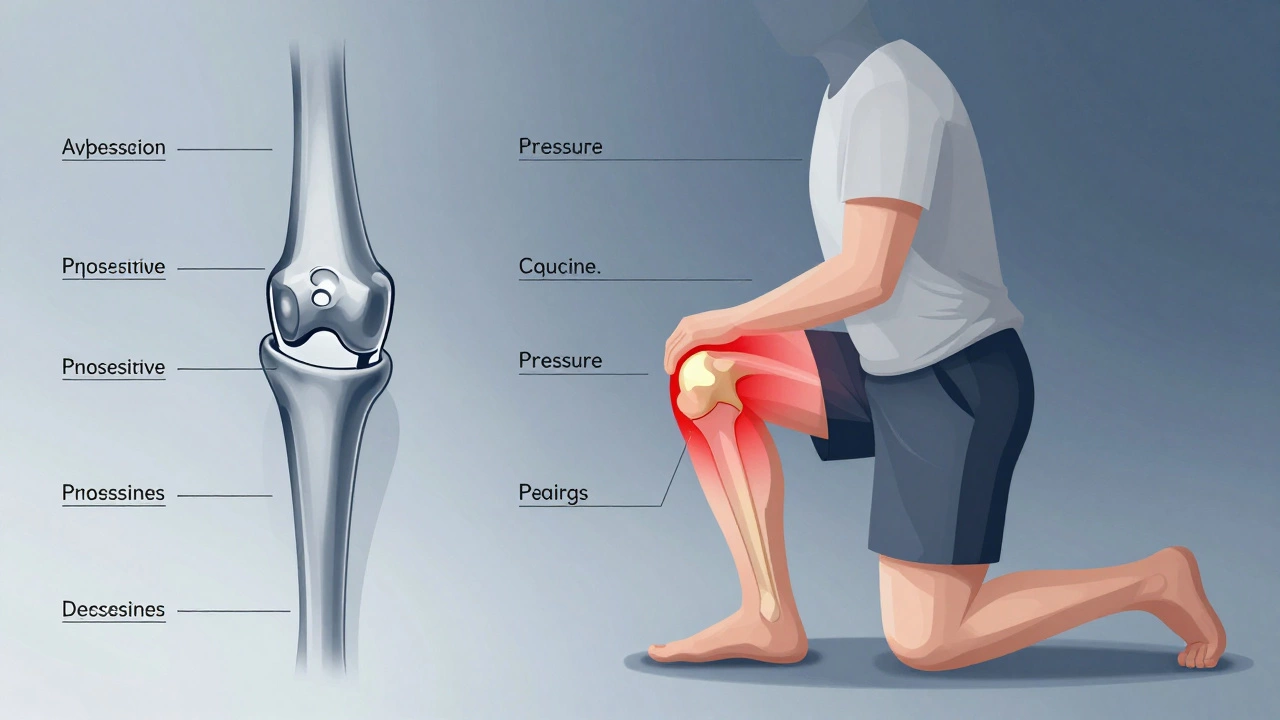
Your new knee isn’t your old knee. Even the best artificial joints are made of metal, plastic, and ceramic. They’re designed to glide smoothly when you walk, climb stairs, or stand up. But kneeling? That’s a different story. Kneeling puts extreme pressure on the front of the knee, right where the implant sits. That’s not where the joint was meant to bear weight in daily use.Early knee replacements from the 1990s often had bulky designs that dug into the soft tissue when you bent deeply. That’s why many older patients were told never to kneel. But modern implants are thinner, smoother, and shaped to allow more natural motion. Surgeons today use techniques that preserve more of your natural anatomy, including the kneecap and surrounding tendons. These changes matter.
What Research Actually Says About Kneeling
A 2023 study published in The Journal of Bone and Joint Surgery followed 1,200 patients who had total knee replacements over five years. About 68% of them reported being able to kneel without pain after one year. Of those, 42% said they kneel regularly-for prayer, cleaning, or hobbies. Only 14% said they avoided kneeling entirely due to discomfort.Another study from the Mayo Clinic tracked 800 patients for three years. Those who started gentle kneeling exercises by week 12 had 30% higher rates of full kneel recovery compared to those who waited until six months. The key? Progression, not avoidance.
When Can You Start Trying to Kneel?
Don’t rush it. But don’t wait forever either. Most surgeons agree on this timeline:- Weeks 1-4: Focus on walking, straightening your leg, and reducing swelling. No kneeling.
- Weeks 5-8: You can start practicing kneeling on a soft surface-like a pillow or foam pad-while holding onto a stable chair. Don’t push into pain. Just get used to the feeling.
- Weeks 9-12: If you have no swelling or sharp pain, try kneeling on the floor for short periods. Use a cushion under your knee if needed.
- After 3-6 months: Most people can kneel normally if they’ve built up strength and flexibility.
Some patients feel ready by six weeks. Others need six months. It depends on your age, muscle strength, pre-surgery mobility, and how well you followed rehab.
How to Kneel Safely After Surgery
Kneeling isn’t just about bending your knee-it’s about controlling how you put pressure on it. Here’s how to do it right:- Always use a soft pad or cushion under your knee. Even if your implant is smooth, the skin and tissue on the front of your knee are still sensitive.
- Don’t drop to your knees. Lower yourself slowly, using your hands and your good leg for support.
- Keep your back straight. Don’t lean forward. That shifts weight onto your knee.
- Stand up by pushing through your heels and using your arms. Don’t push up with your knee.
- If you feel a deep ache or burning, stop. That’s not normal pain-it’s your body saying the joint isn’t ready yet.
Why Some People Never Kneel Again
Not everyone can kneel comfortably after knee replacement-and that’s okay. Here’s why:- Scar tissue buildup: After surgery, your body forms scar tissue around the joint. If it’s thick or tight, it can block deep bending.
- Weak quadriceps: Your thigh muscles control how your kneecap moves. If they’re weak, your kneecap can rub abnormally, causing pain.
- Implant design: Some implants are optimized for walking and stair climbing, not deep flexion. This is rare now, but still possible with older models.
- Pain sensitivity: Some people have nerves that remain extra sensitive after surgery. Even normal pressure feels sharp.
If you’ve tried kneeling for six months and still can’t do it without pain, talk to your physical therapist. You might need targeted stretching, manual therapy, or a custom brace. Don’t assume it’s impossible.
What Activities Can You Do Instead of Kneeling?
You don’t have to kneel to pray, garden, or clean. Here are practical alternatives:- For prayer: Use a prayer stool or a low bench. Many mosques and churches now provide them. You can also sit cross-legged or in a chair with your hands on your knees.
- For gardening: Use a kneeling pad with handles, or sit on a small stool with wheels. Raised garden beds eliminate the need to bend at all.
- For cleaning: Use a long-handled mop or brush. A vacuum with a floor attachment works better than crawling.
These aren’t compromises-they’re smart adaptations. People who switch to these methods often report less pain and more independence.
What Your Doctor Won’t Tell You
Most surgeons focus on walking, range of motion, and pain relief. They don’t always ask about kneeling. So if it matters to you, speak up. Ask:- “What type of implant did you use? Is it designed for deep flexion?”
- “Can you recommend a physical therapist who specializes in kneecap mobility?”
- “Are there any exercises I should avoid that might damage the implant?”
Implants like the Zimmer Biomet NexGen, Stryker Triathlon, and Depuy Attune are known for better flexion. If your surgeon used one of these, you have a better chance of kneeling comfortably.
Real Stories From People Who Kneel Again
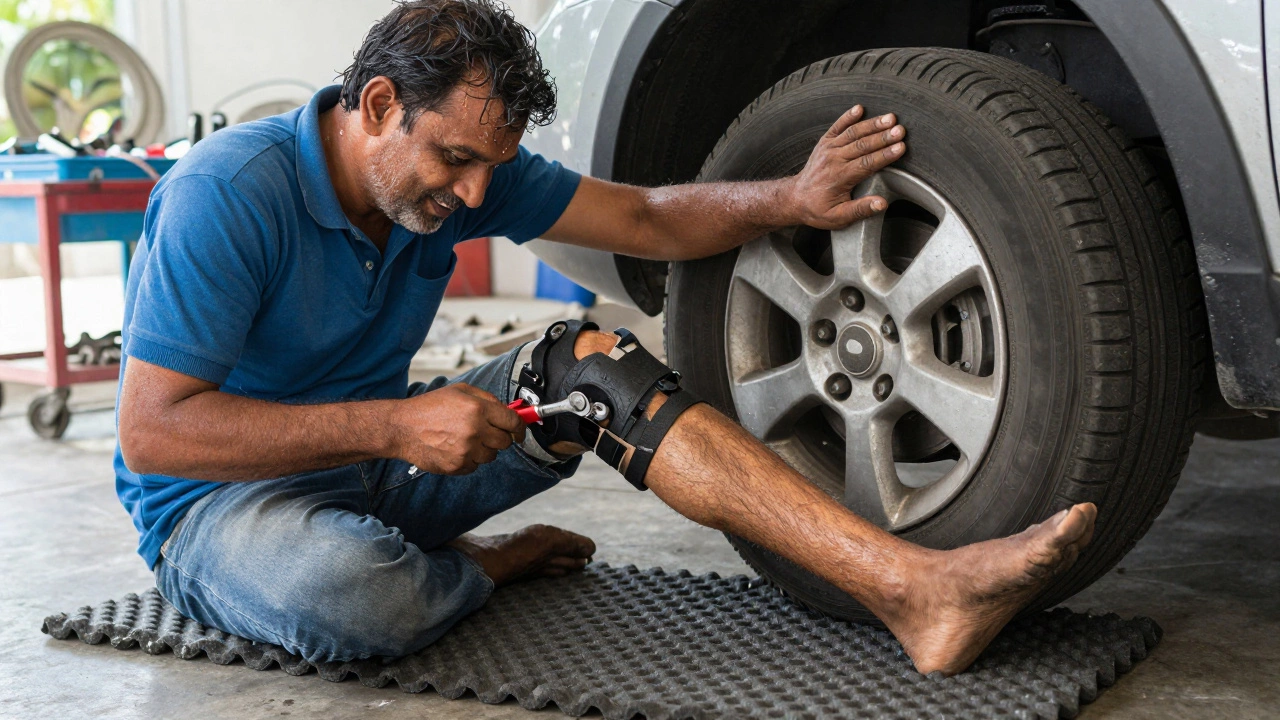
Meena, 67, from Chennai, had her knee replaced in 2023. She’s a devout Hindu who prays daily. For six months, she sat on a chair during prayers. Then, she started kneeling on a folded towel. By month eight, she was kneeling on the floor for 10 minutes at a time. “It doesn’t feel like my old knee,” she says. “But it feels like mine now.”Raj, 52, from Pune, is a mechanic. He used to kneel under cars all day. After his replacement, he thought he’d never do it again. He started with a thick foam mat and a back brace. Within five months, he was back under the car-just slower, and with more breaks. “I don’t rush anymore,” he says. “And I don’t regret the surgery.”
Final Thought: It’s Not All or Nothing
You don’t have to kneel perfectly. You don’t have to kneel every day. You just need to know it’s possible-for many people, it is. The goal isn’t to return to how you were before surgery. It’s to regain the freedom to choose. If kneeling brings you peace, joy, or dignity, then it’s worth working toward. But if it causes pain? There are other ways to live fully.Can I kneel on my new knee right after surgery?
No. You should avoid kneeling for at least the first four weeks after surgery. Your tissues are healing, and pressure can cause swelling or damage. Wait until your surgeon or physical therapist clears you for deep bending.
Will kneeling damage my knee replacement?
Kneeling won’t break or wear out your implant if done correctly. Modern knee replacements are tested to handle deep bending. But if you kneel too soon, too hard, or without support, you can irritate the soft tissues around the joint, leading to pain and swelling. It’s about timing and technique-not the implant itself.
Why does my knee burn when I kneel?
That burning feeling is usually nerve sensitivity. After surgery, nerves around the knee can be irritated or stretched. When you kneel, pressure on the front of the knee stimulates those nerves. It’s not a sign of damage, but it can be uncomfortable. Over time, the sensation fades. Using a cushion and reducing pressure helps.
Is it normal to feel stiffness when I kneel after six months?
Mild stiffness is common, especially if you haven’t been practicing kneeling regularly. Your joint may feel tight because you’re not using it in that position often. Gentle stretching and kneeling on a soft surface for 5-10 minutes daily can help. If the stiffness turns into pain or swelling, check with your therapist.
Can I kneel if I have both knees replaced?
Yes, but it’s harder. Two replaced knees mean less natural shock absorption and more pressure on your hips and back. Use a cushion, take breaks, and avoid kneeling for long periods. Many people with double replacements use a kneeling stool or sit on their heels instead.
 When Is ADHD the Hardest? Understanding Age, Struggles, and Strategies
 What Is the Fastest Killing Cancer?
 What Pants to Wear After Knee Surgery: Comfort and Recovery Guide
 Does the FDA approve herbal supplements? Here's what actually happens
 Unveiling the Secrets of Vitamin C for Radiant Skin