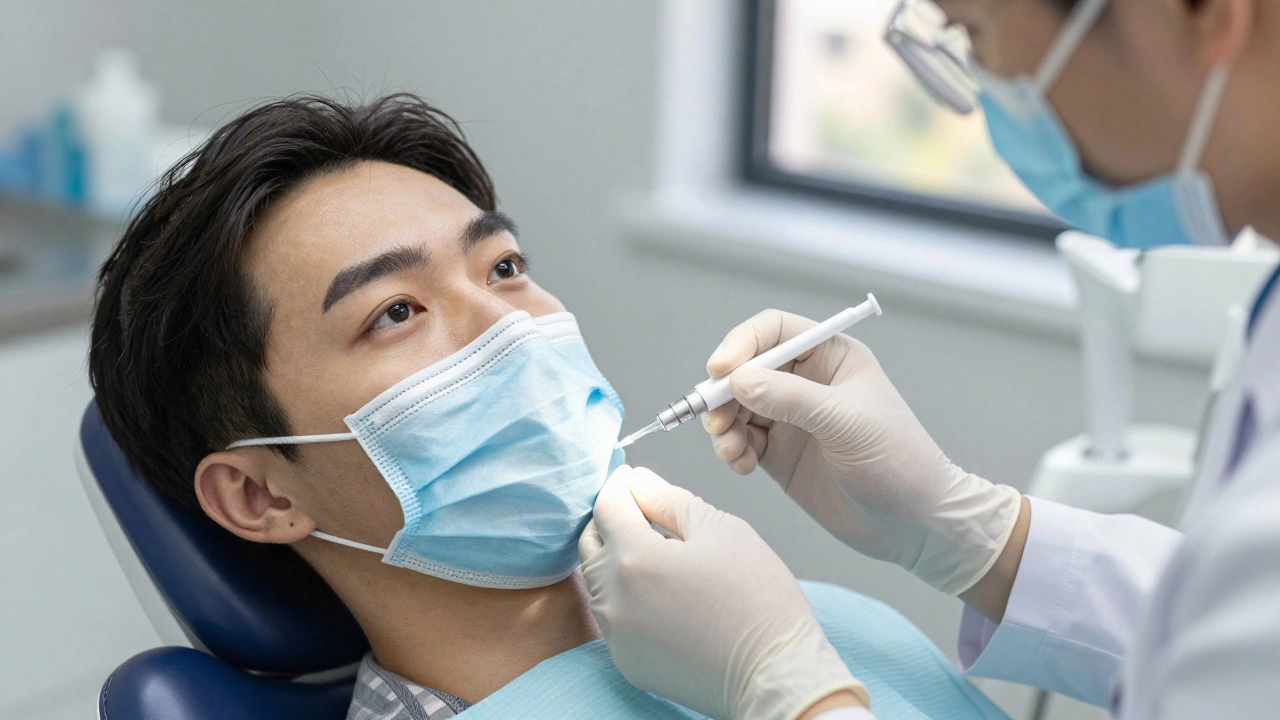
Dental Implant Sedation Selector
Find the Right Sedation for Your Implant Procedure
This tool helps you determine which anesthesia option is most appropriate for your dental implant procedure based on your individual circumstances.
Your Recommendation
Important Considerations
Remember that your dentist will make the final decision based on your specific health situation. This tool is for informational purposes only and does not replace professional medical advice.
When you hear the words dental implants, your mind might jump to long procedures, sharp tools, and waking up in pain. A lot of people wonder: Am I going to be put to sleep for this? The short answer? Not always. But you don’t have to be awake and alert either. What happens depends on your comfort level, medical history, and how complex your case is.
Most dental implant procedures use local anesthesia
The majority of dental implant surgeries in India and around the world are done with just local anesthesia. That means your dentist numbs the area around the jaw where the implant will go-like how you’d get a filling. You’re fully awake, but you won’t feel any pain. You might feel pressure, maybe a bit of vibration, but no sharp sensations. This is the standard for single implants or straightforward cases.Think of it like getting a tooth pulled. You’re aware of what’s happening, but your body doesn’t register discomfort. Most patients handle this just fine. In fact, many say they’re surprised it wasn’t worse. Dentists in Bangalore, Chennai, and Hyderabad routinely do 20-30 implant cases a week using this method. It’s safe, fast, and costs less than sedation options.
When do you actually get put to sleep?
"Put to sleep" usually means general anesthesia-where you’re completely unconscious. This isn’t common for most dental implants. But it does happen in specific situations:- You have severe dental anxiety and can’t sit still even with mild sedation
- You’re getting multiple implants in one session (like a full arch replacement)
- You have a medical condition that makes local anesthesia risky
- You’ve had traumatic dental experiences in the past
General anesthesia is typically done in a hospital or specialized surgical center, not a regular dental clinic. It requires an anesthesiologist to monitor your breathing and heart rate. It’s more expensive and carries slightly higher risks-like nausea after waking up or reactions to the drugs. That’s why dentists only recommend it when absolutely necessary.
IV sedation: The middle ground
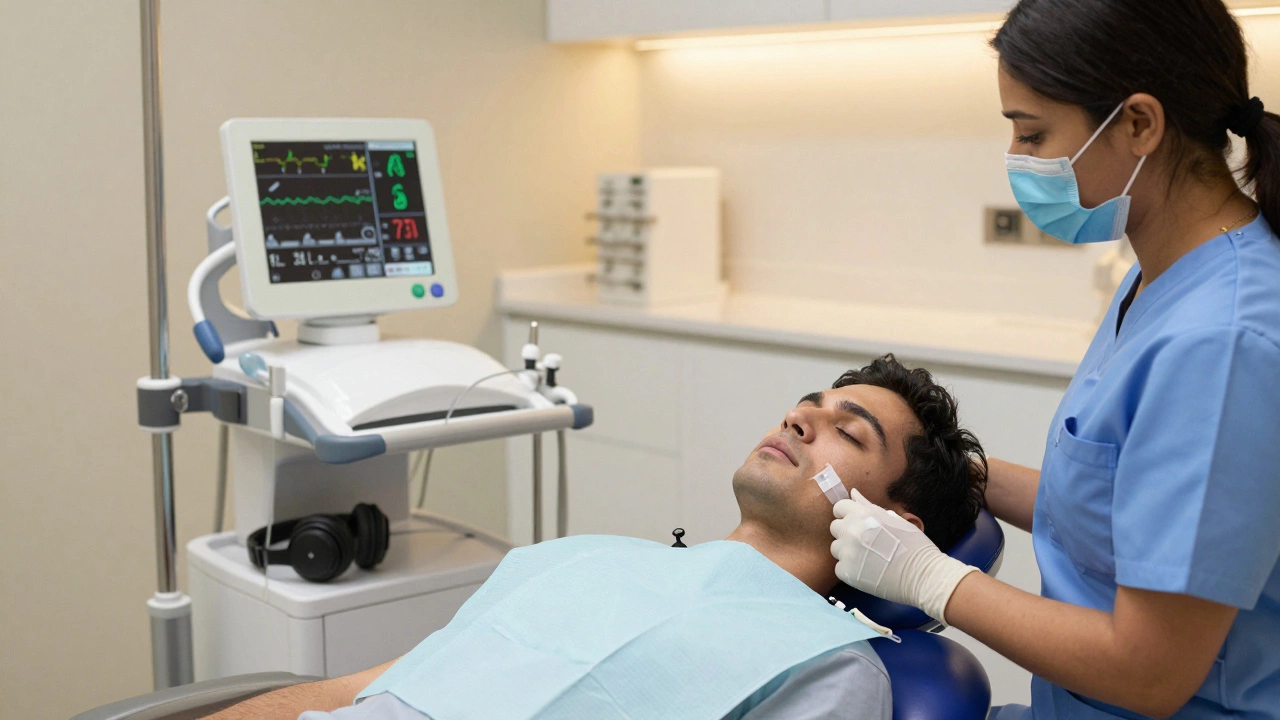
Many patients don’t realize there’s a third option: IV sedation. This isn’t full sleep, but it’s deeper than just being numb. You’re given medication through a vein in your arm that makes you very relaxed, sometimes even drowsy. You might drift off, but you can still be woken up easily. Most people don’t remember much of the procedure afterward.IV sedation is popular in India because it balances safety and comfort. You’re not intubated like under general anesthesia, but you feel calm and detached. Dentists in private clinics across Bangalore and Pune offer this regularly. It’s ideal for people who want to avoid being awake but aren’t ready for full surgery-level sedation.
What about nitrous oxide? Can I just "laugh gas" my way through it?
Nitrous oxide-also called laughing gas-is another option. It’s inhaled through a mask and helps reduce anxiety. You stay awake, but you feel lighter, calmer, and less aware of time passing. It wears off quickly once the mask is removed. This is great for mild anxiety or first-timers. But it doesn’t replace local anesthesia. You still need numbing shots. It’s more about calming your nerves than blocking pain.Not every clinic offers nitrous oxide. It’s more common in high-end private practices. In government hospitals or smaller clinics, it’s rare. If you’re interested, ask ahead of time. It’s usually affordable-often under ₹1,500 for the session.
Why don’t all dentists use sleep sedation?
You might wonder why more people don’t get put to sleep if it’s so comfortable. The answer is simple: it’s not needed for most cases. Dental implants are minimally invasive. The bone doesn’t have pain receptors, and the gum tissue heals quickly. Most of the discomfort comes from swelling afterward, not the surgery itself.Also, sedation adds cost and complexity. General anesthesia can add ₹15,000 to ₹30,000 to the total price of your implant. IV sedation adds ₹8,000 to ₹15,000. Local anesthesia? Usually included in the base price. For many, it’s not worth the extra expense unless anxiety is overwhelming.
Plus, recovery is faster with local anesthesia. You can drive yourself home. With IV or general sedation, you need someone to take you home and stay with you for a few hours. You might feel groggy the whole day.
What does the procedure actually feel like?
If you’ve never had dental work beyond fillings, this might sound scary. But here’s what it’s really like:- You’ll sit in a reclining chair, same as for a cleaning
- Your dentist will clean the area and inject numbing medicine-this feels like a pinch, lasts a few seconds
- You’ll wait 5-10 minutes for the numbness to set in
- They’ll make a small cut in your gum, drill a tiny hole in the bone, and place the titanium implant
- You might hear buzzing from the drill, feel pressure pushing against your jaw
- It usually takes 30-60 minutes per implant
- When it’s done, they’ll stitch the gum and give you gauze to bite on
Most patients say the hardest part is holding still. The noise of the drill bothers some more than the pain. If you’re nervous, bring headphones and play calming music. Many clinics allow it.
Who should consider deeper sedation?
Not everyone needs to be awake. If any of these sound like you, talk to your dentist about IV or general sedation:- You’ve avoided the dentist for years because of fear
- You have a strong gag reflex
- You have a history of panic attacks
- You’re getting 4-6 implants in one visit
- You have a disability that makes sitting still difficult
These aren’t deal-breakers. They’re valid reasons to ask for help. Good dentists won’t judge you. They’ve seen it all. Your comfort matters just as much as the implant itself.
What about children or teens?
Dental implants aren’t usually done on kids. Their jaws are still growing. But for teens with missing teeth due to injury or congenital issues, implants can be an option. In those cases, sedation is more common. Parents often request IV sedation so their child doesn’t remember the procedure. It’s safe when done by trained professionals in a controlled environment.How to decide what’s right for you
Here’s a simple way to choose:- If you’re calm and have had dental work before → local anesthesia is fine
- If you’re nervous but can handle a little discomfort → IV sedation
- If you panic at the sight of a needle or drill → talk to your dentist about general anesthesia
- If you’re getting multiple implants → ask about IV sedation to reduce stress
Don’t assume you need to be asleep. Most people do great with local anesthesia. But don’t suffer through fear either. There are options. Ask questions. Get a second opinion if you’re unsure.
What to expect after the procedure
No matter what type of anesthesia you get, recovery is similar:- Swelling peaks in 24-48 hours
- Pain is usually mild-over-the-counter painkillers like paracetamol work well
- Bleeding stops within a few hours
- You’ll need soft foods for 3-5 days
- Avoid smoking, alcohol, and straws for at least a week
Most people go back to work the next day. If you had sedation, take the day off. Rest. Let your body recover. The implant itself takes 3-6 months to fully fuse with your jawbone. That’s the healing phase. The surgery? Over in under an hour.
Final thought: You’re in control
No one should force you to be awake if you’re terrified. But no one should push you into general anesthesia if you don’t need it. The best decision is the one that matches your comfort level, budget, and medical needs. Talk to your dentist. Ask what they recommend. Get a written plan. Then decide.Dental implants change lives. They let you eat, smile, and speak without worry. But the procedure doesn’t have to be scary. With the right approach, it’s one of the most predictable, low-risk treatments in modern dentistry.
Do I need to be put to sleep for a single dental implant?
No, you don’t need to be put to sleep for a single implant. Most patients are numbed with local anesthesia and stay awake during the procedure. You won’t feel pain, only pressure. Sedation is only recommended if you have severe anxiety or medical reasons.
Is IV sedation safer than general anesthesia for dental implants?
Yes, IV sedation is generally safer than general anesthesia for dental implants. It doesn’t require intubation or deep unconsciousness. You remain in a relaxed, semi-awake state, and recovery is faster. Risks like breathing problems or allergic reactions are much lower with IV sedation.
Can I drive myself home after dental implant surgery?
Only if you had local anesthesia. If you received IV sedation or general anesthesia, you must have someone drive you home. The effects can last several hours, and it’s unsafe to operate a vehicle. Most clinics require a companion for sedated patients.
How much does sedation add to the cost of dental implants in India?
Local anesthesia is usually included in the implant price. IV sedation adds ₹8,000 to ₹15,000. General anesthesia can add ₹15,000 to ₹30,000, depending on the hospital and duration. Costs vary by city-Bangalore and Mumbai tend to be higher than smaller towns.
Will I remember anything if I get IV sedation?
Most people remember very little or nothing at all. IV sedation creates a state of deep relaxation and mild amnesia. You may recall fragments-like the sound of the drill or someone talking-but you won’t feel anxious or in pain. It’s designed to help you forget the experience.
Are dental implants painful after the anesthesia wears off?
Most patients report mild to moderate discomfort, similar to after a tooth extraction. It’s usually managed with paracetamol or ibuprofen. Swelling peaks in the first two days. Severe pain is rare and should be reported to your dentist immediately.
Can I get dental implants if I have high blood pressure or diabetes?
Yes, but you’ll need clearance from your doctor. Well-controlled diabetes and high blood pressure aren’t barriers to implants. Your dentist will check your blood sugar and BP before the procedure. If your levels are stable, the surgery is safe. Uncontrolled conditions increase infection risk and delay healing.
How long does the entire dental implant process take?
The surgery itself takes 30-90 minutes per implant. But the full process-from consultation to final crown-takes 3 to 6 months. That’s because the implant needs to fuse with your jawbone (osseointegration). You’ll have temporary teeth during this time.
 Does Medicare Cover You If You Travel Overseas? Know Before You Go
 What Are the Disadvantages of IVF? Real Risks and Challenges You Should Know
 Understanding the 4 A's of Orthopedics
 Open Heart Surgery Recovery: What You’ll Need at Home
 Is Medical Tourism Safe in Mexico? What You Need to Know Before You Go